

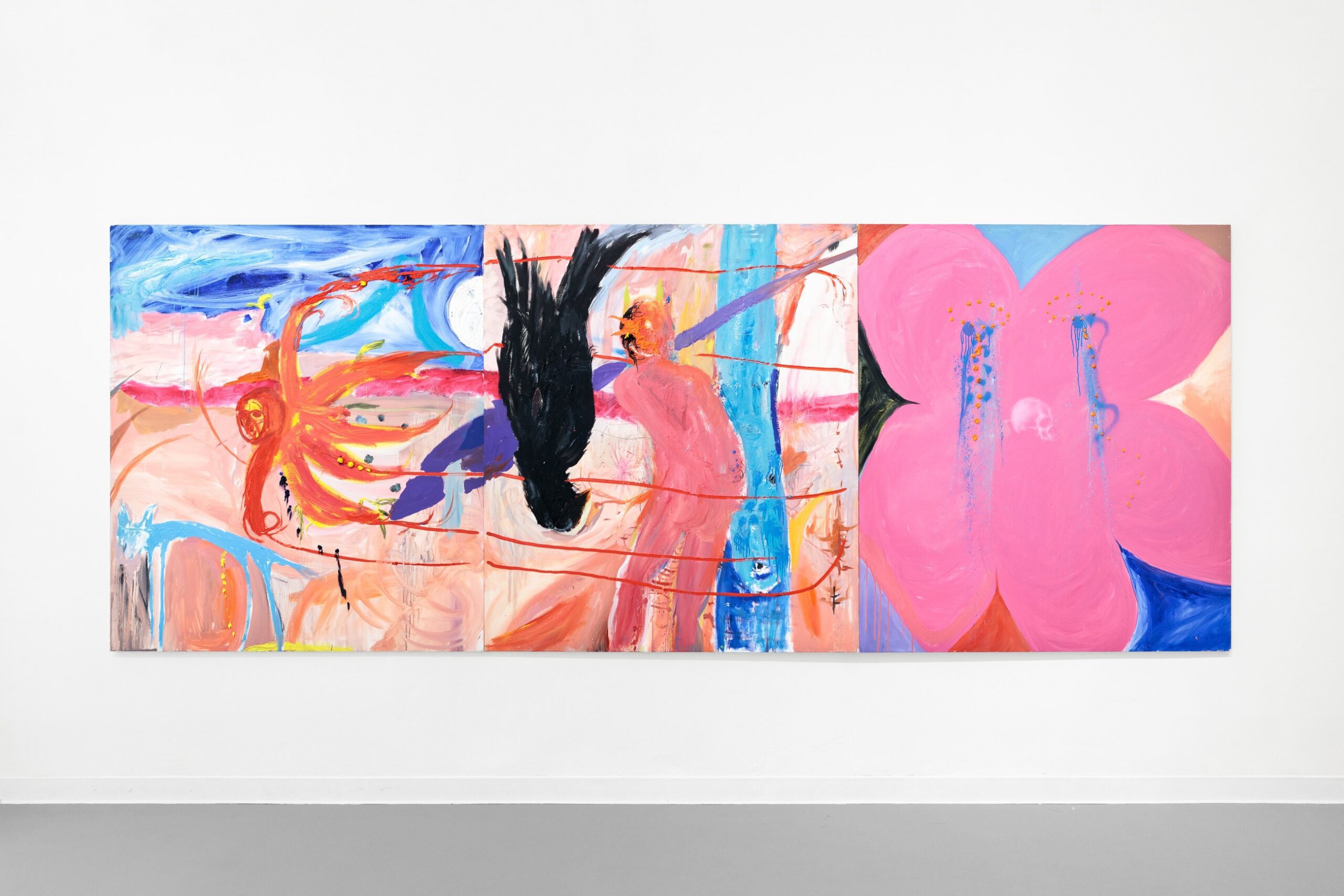
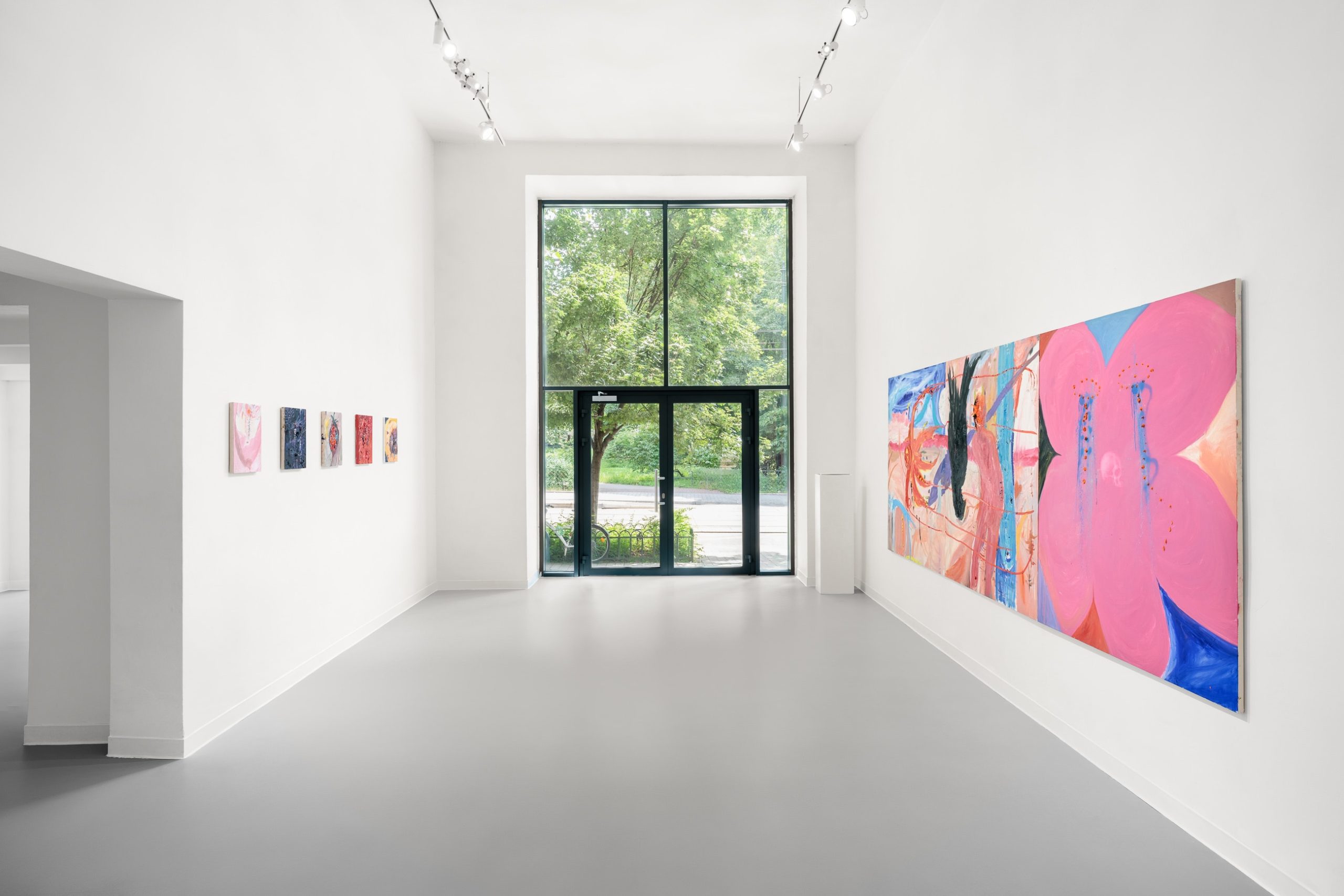
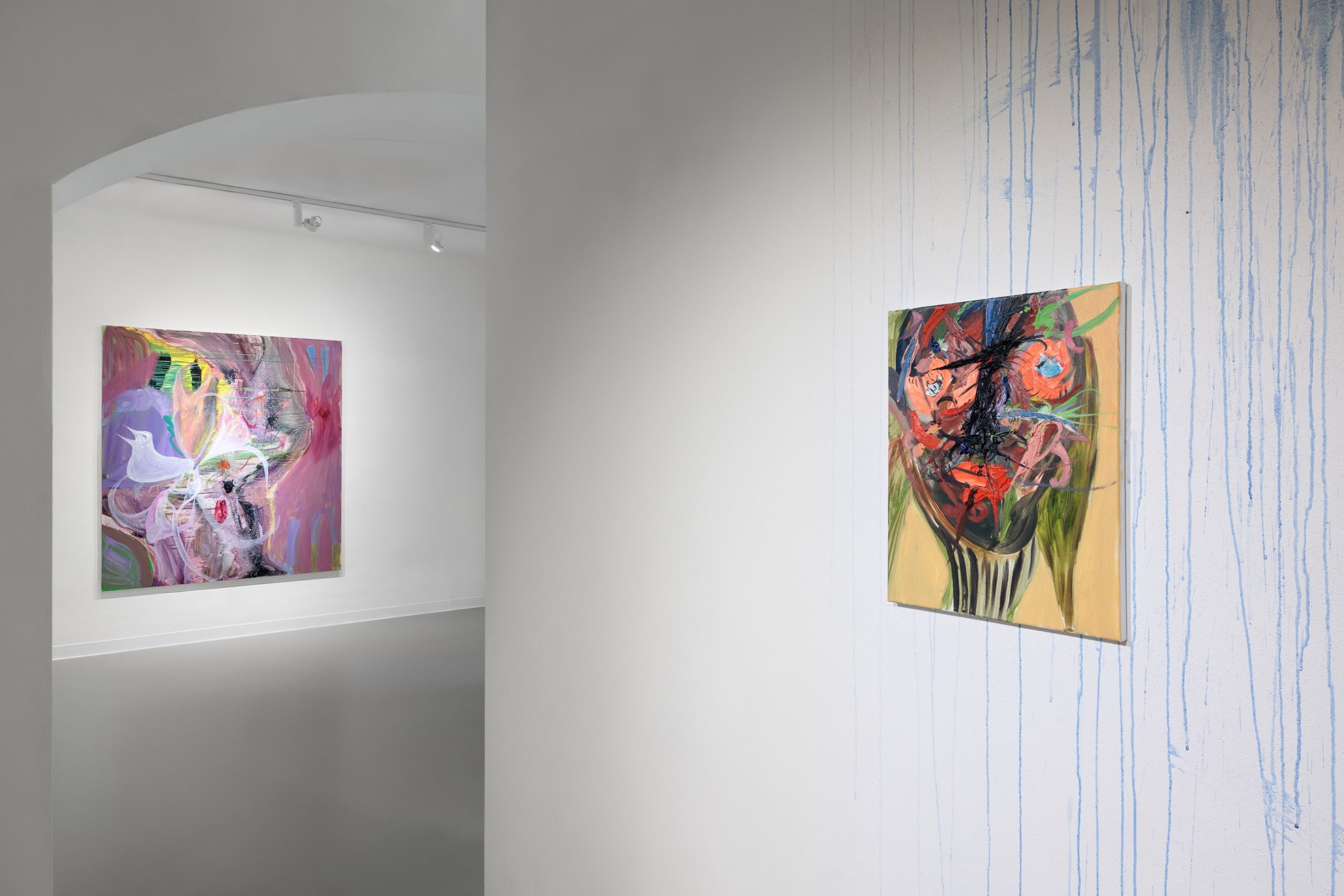
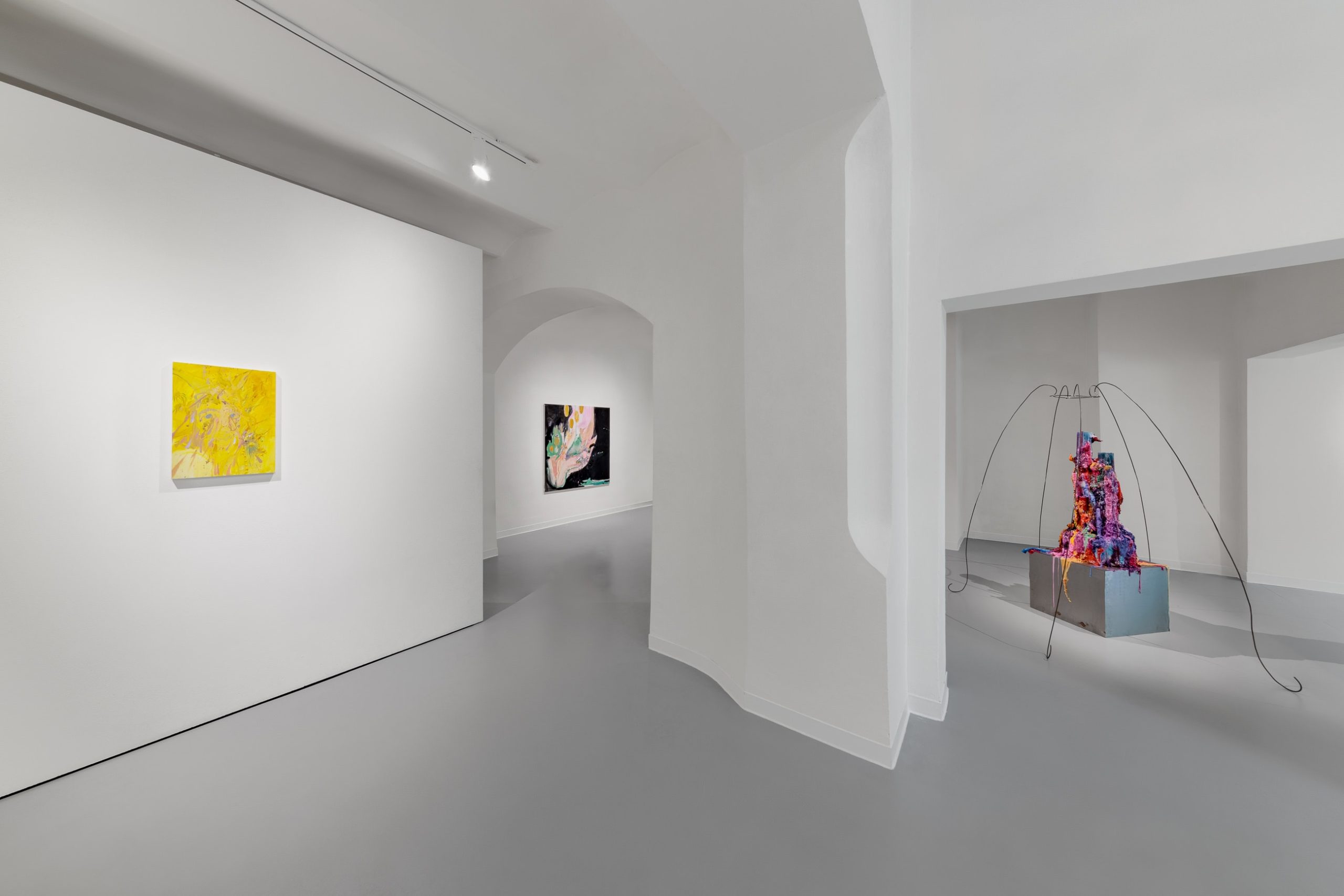
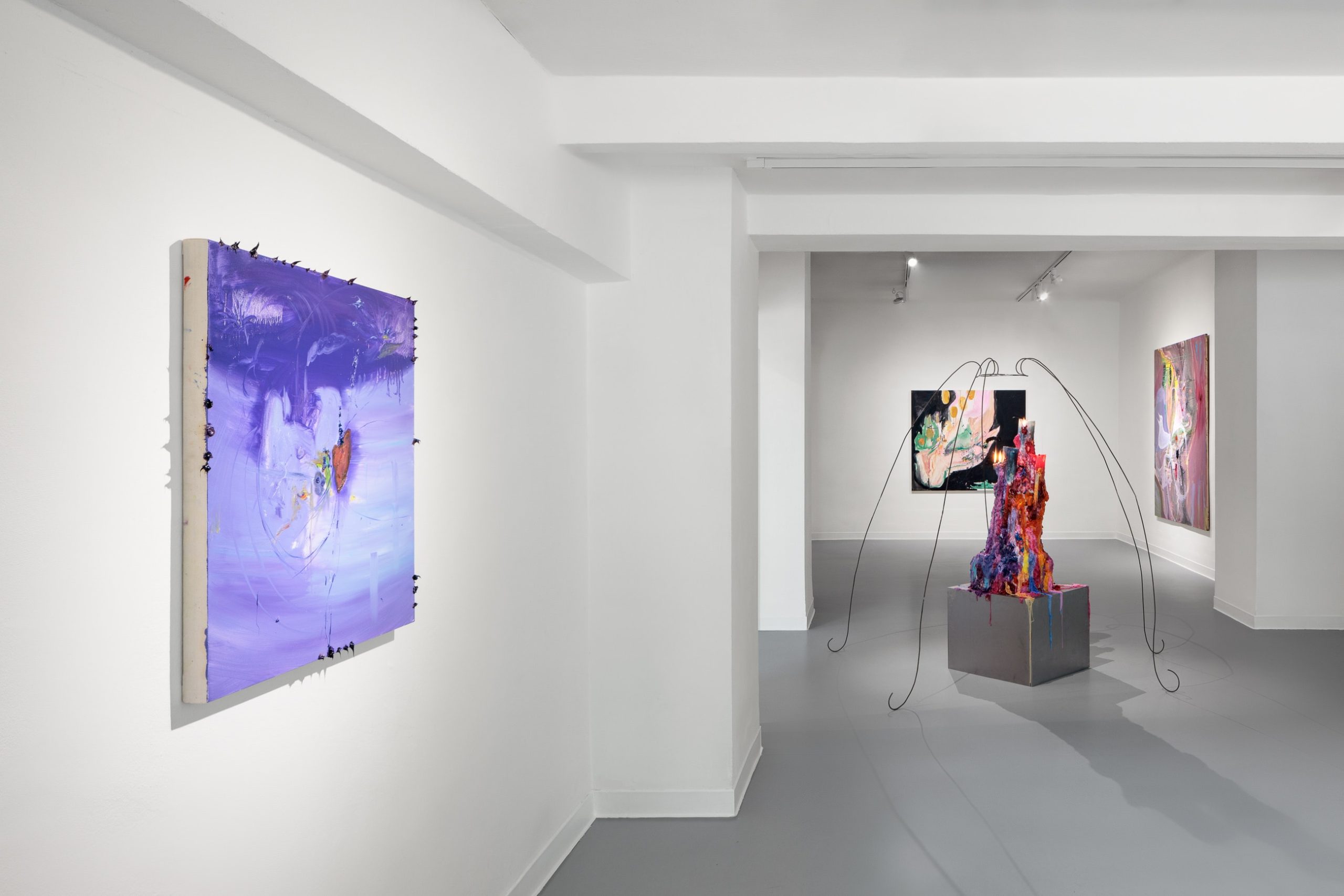
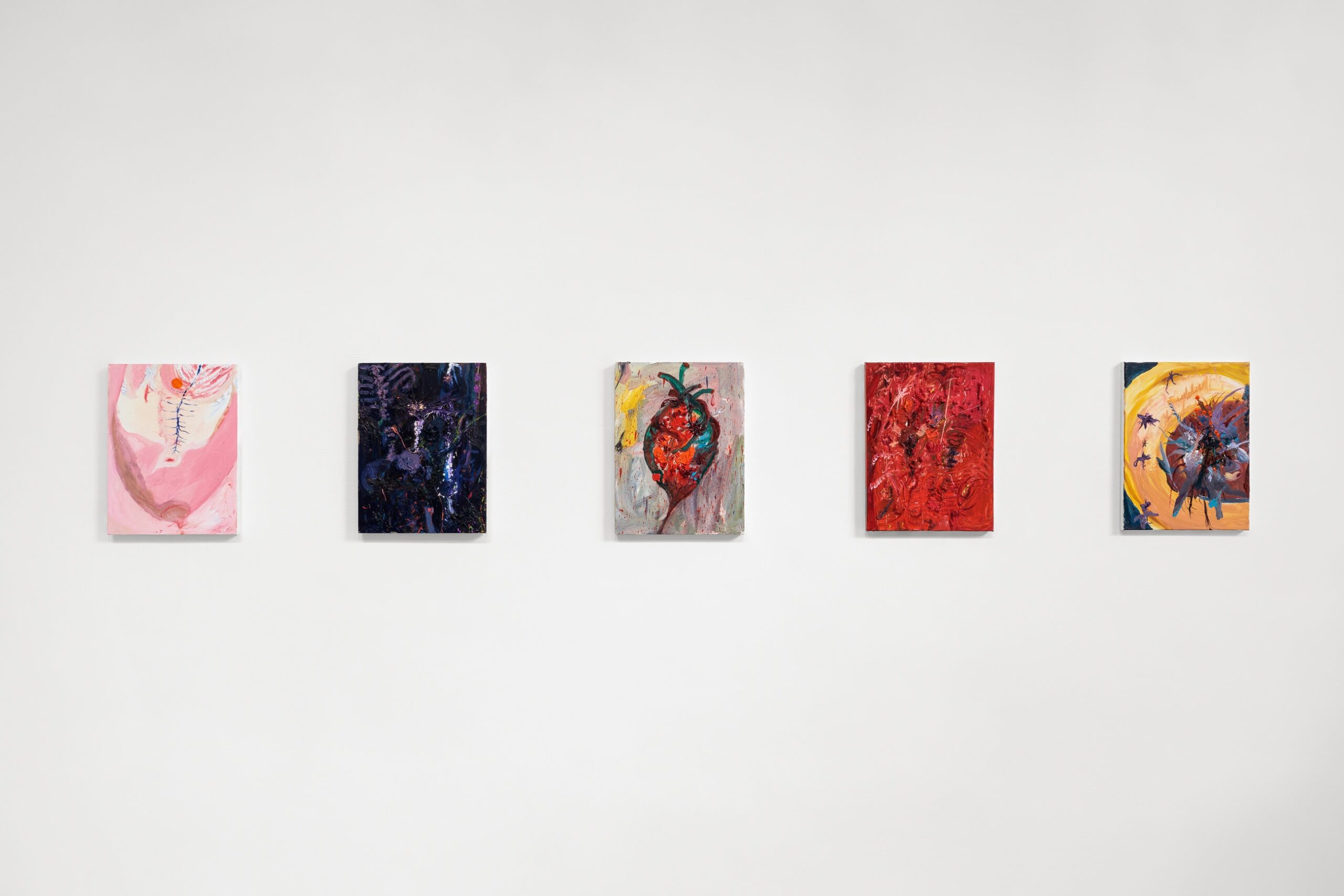
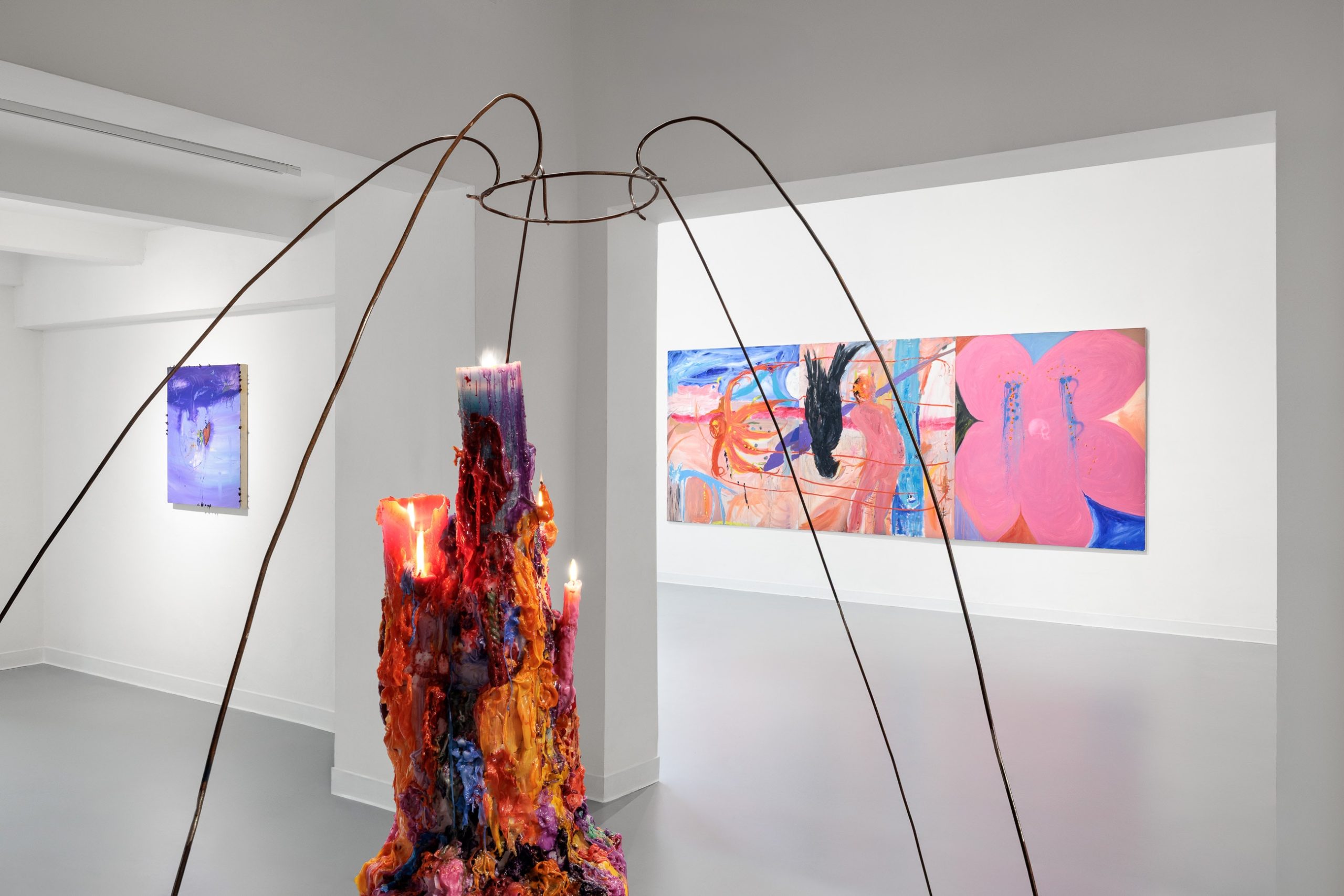
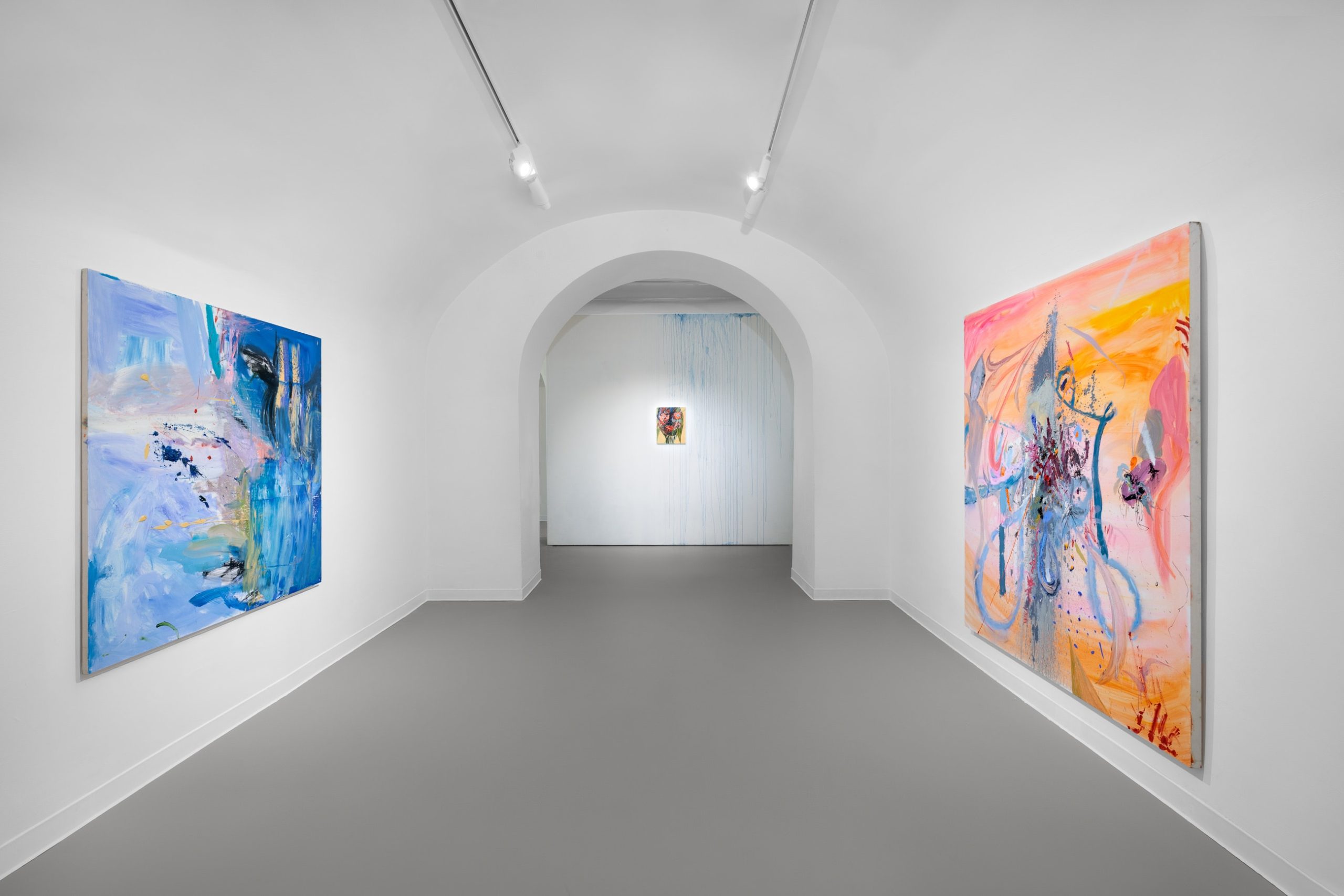
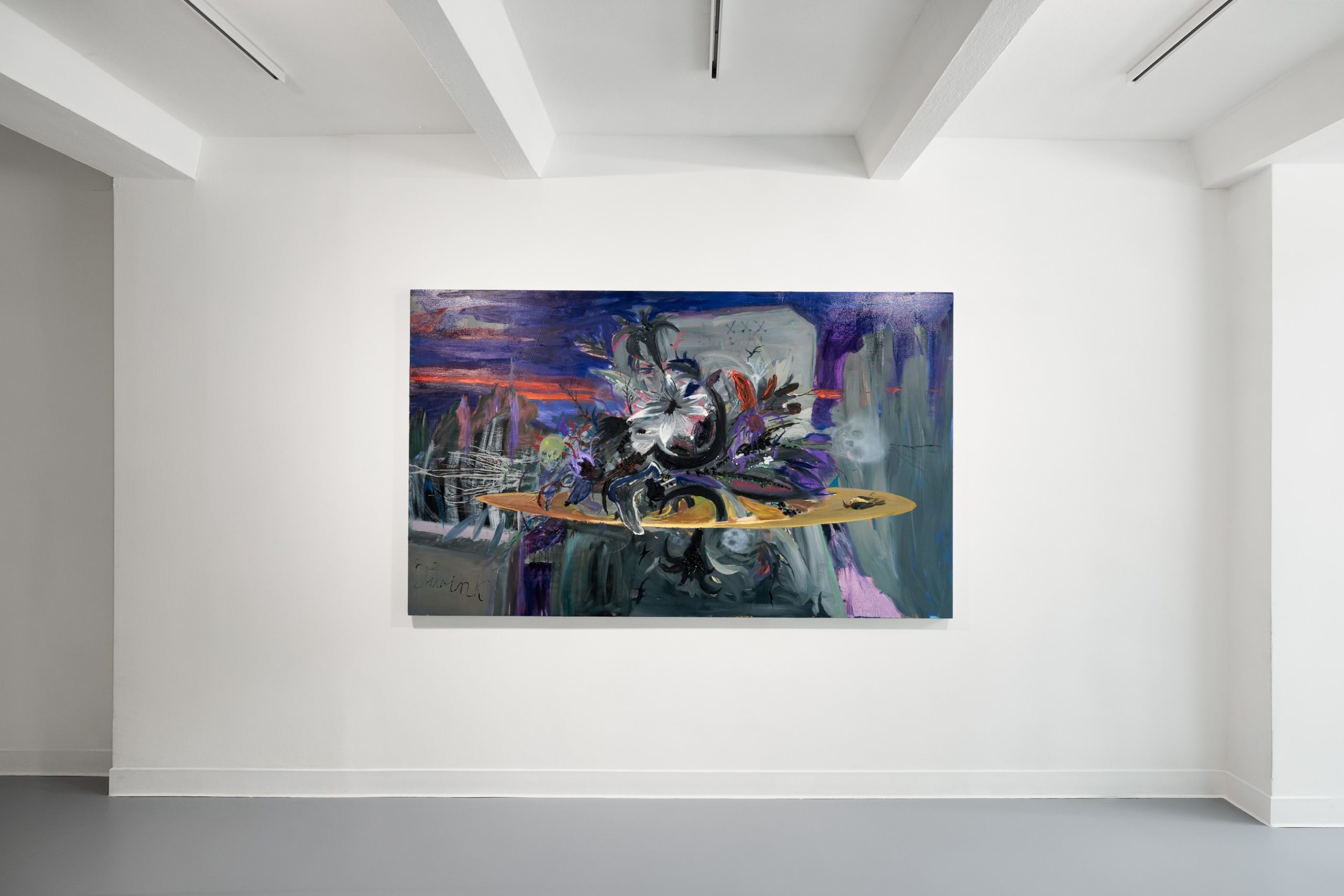
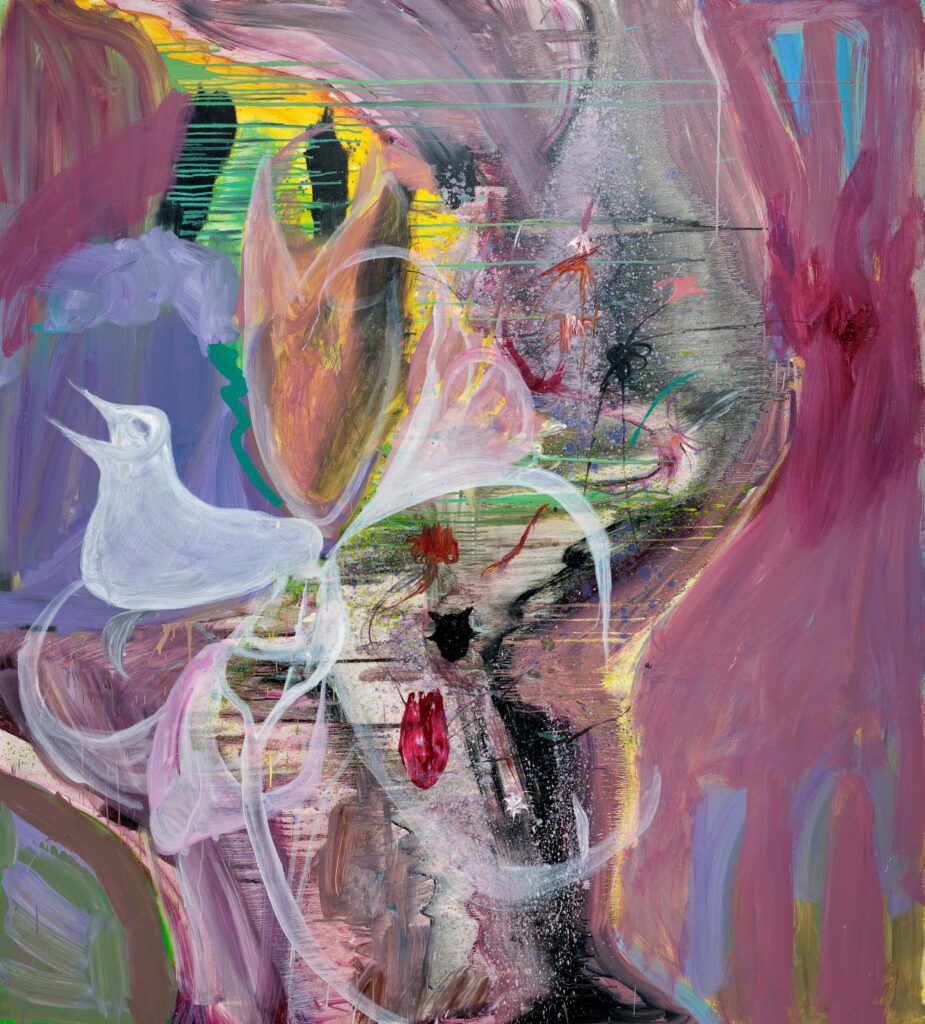
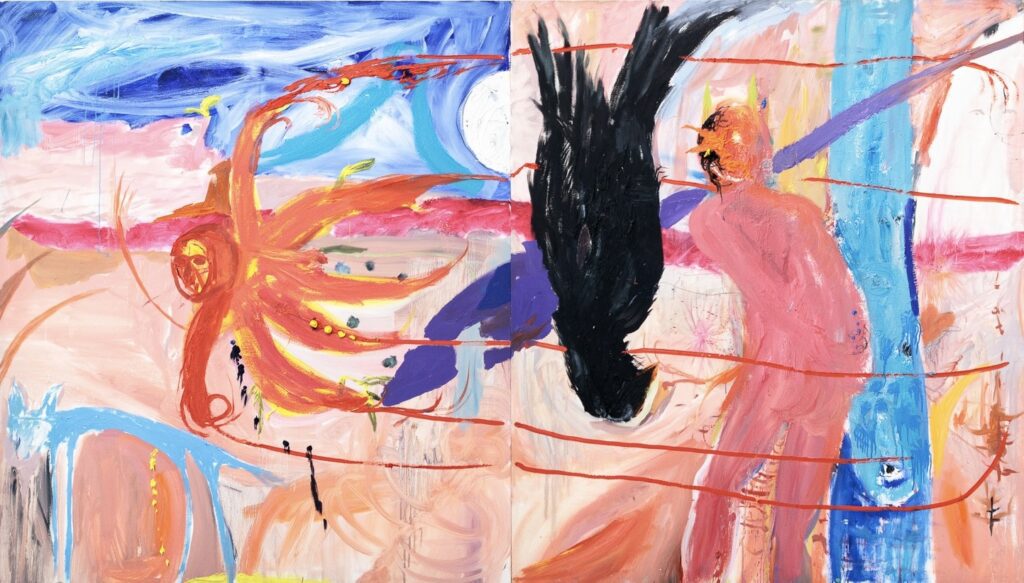
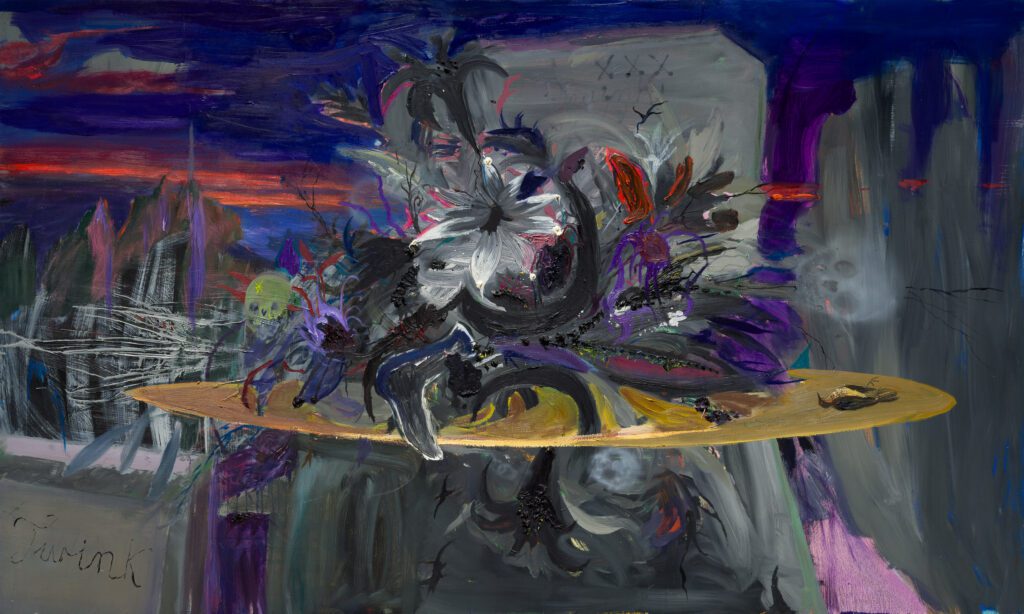
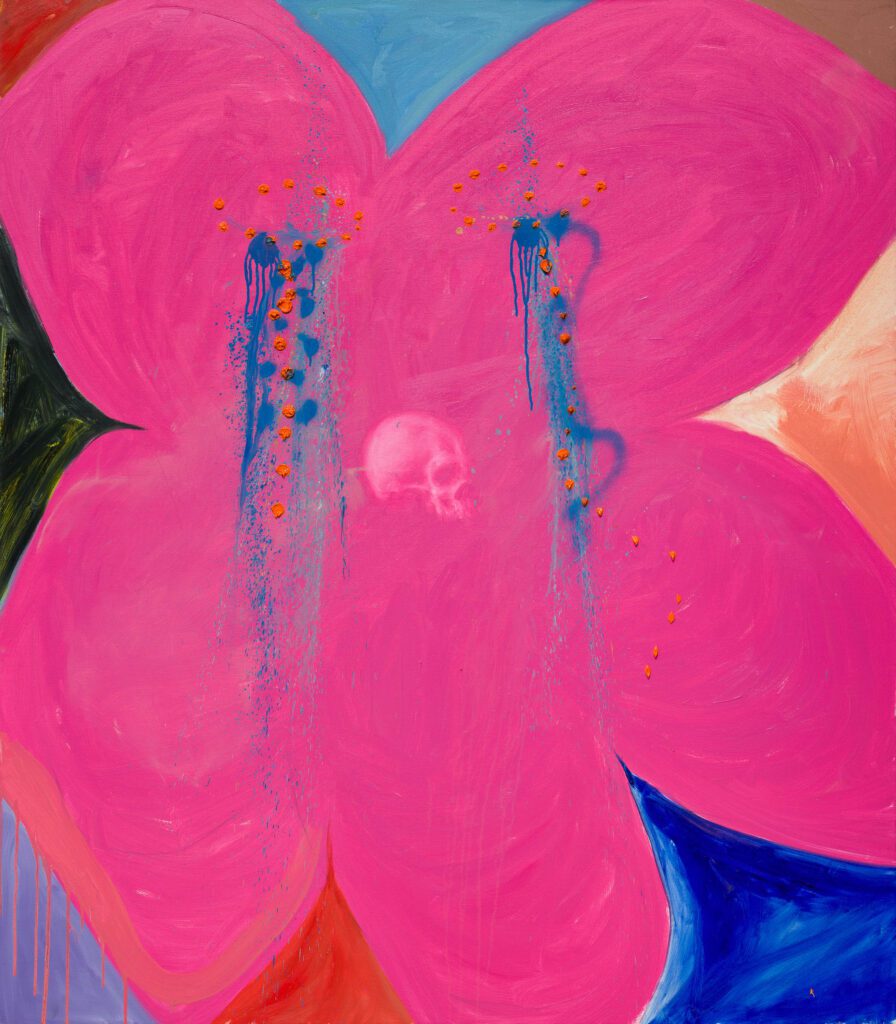
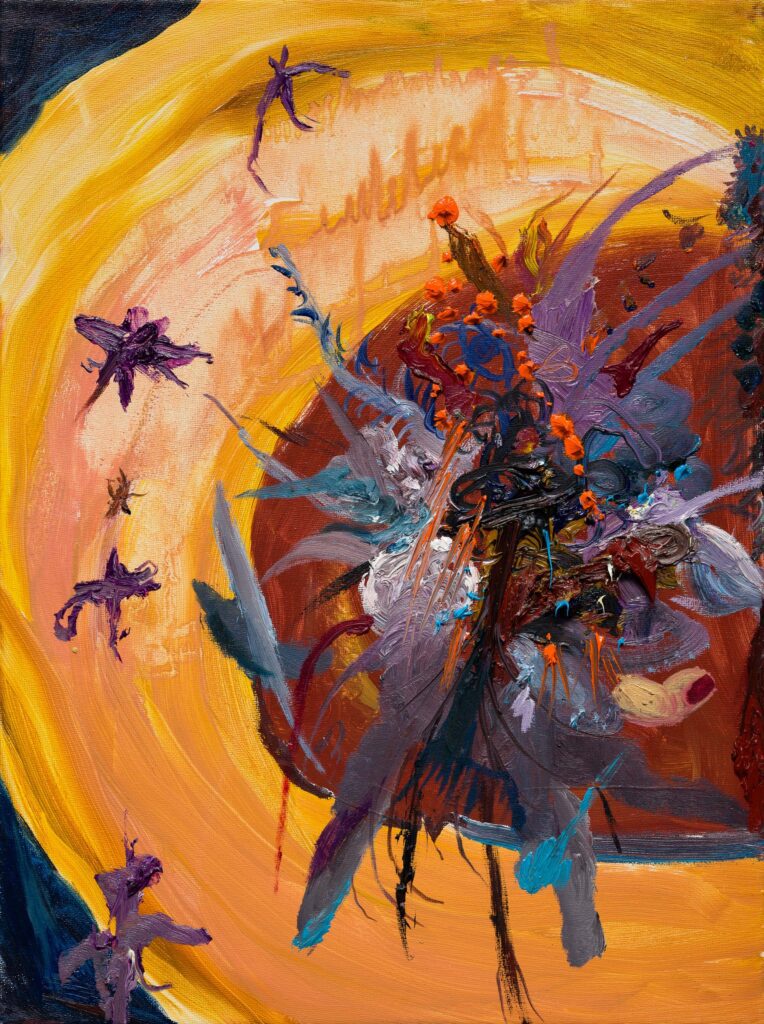
A bird hanging on a wire. A skull concealed within a still-life composition. Flies circling over a rotting bouquet. Spilled candles, masks, ashtrays, clocks, and flowers decomposing in a vase. Sticky traps for the gaze: individual symbols that begin to generate false orders, set off paranoid chains of association, and draw the viewer into a compulsive search for meaning. Like the dead bird in Witold Gombrowicz’s Cosmos, they trigger an obsessive pursuit of significance amid the chaos of reality. The atmosphere thickens, melts, and congeals. Nature turns aggressive, suffocating, reclaiming the space left behind by the human. Everything slowly cracks and dissolves into abstraction. Trembling motifs suspended in thick, heavy air.
Brian Massumi, the Canadian philosopher and social theorist, holds that reality cannot be reduced to an order of stable, “hard” objects that can be unambiguously pointed to and touched. Beyond matter understood in the classical sense — bodies, objects, substances — there exists a dimension of intensity that takes no form of a thing, but operates as the condition of things’ appearance and sensory experience. These are relations of tension, pre-linguistic affects, shifting atmospheres, micro-movements of perception and fields of potentiality that organise experience before it is named or given order. Reality is not given as a collection of ready-made elements, but as a dynamic field of becoming, in which the invisible and the elusive hold a status no less real than the material. These intensities shape the very way in which the world can be perceived, felt, and interpreted.
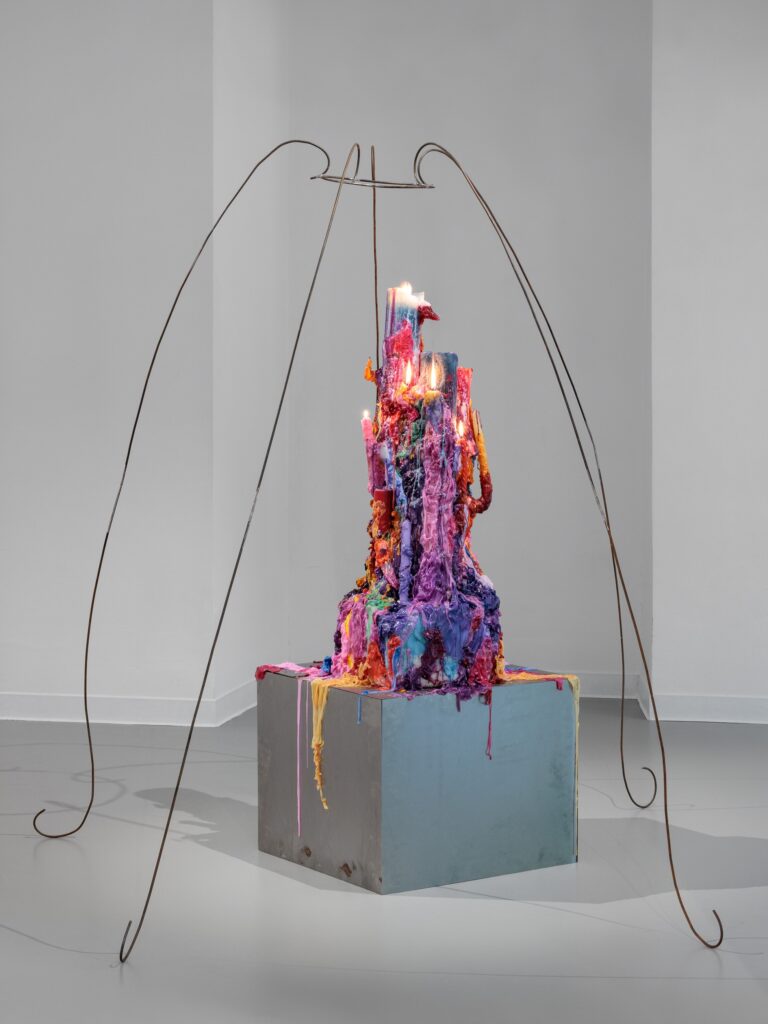
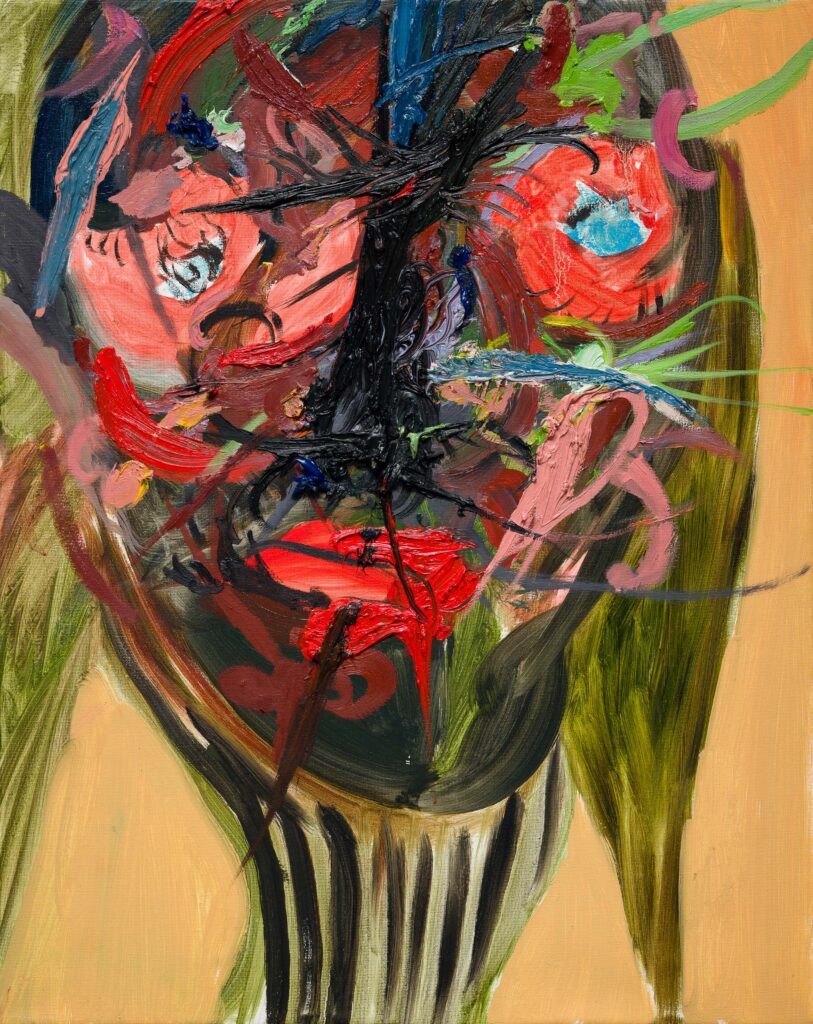
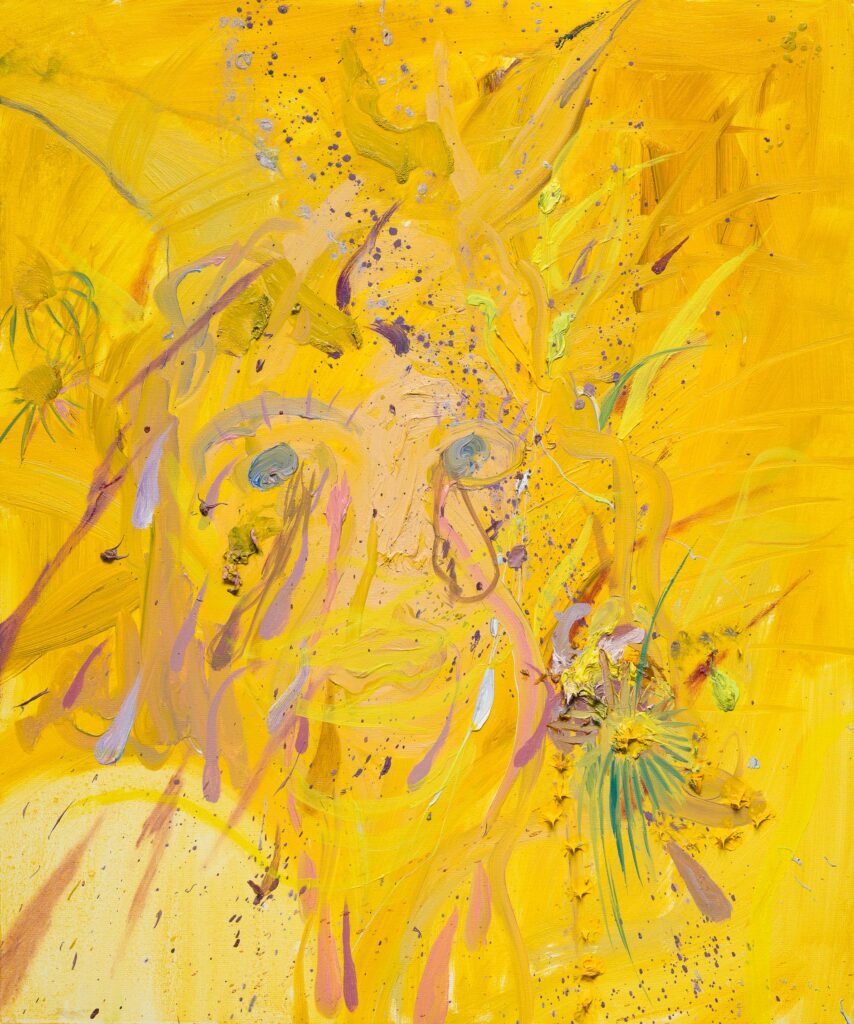
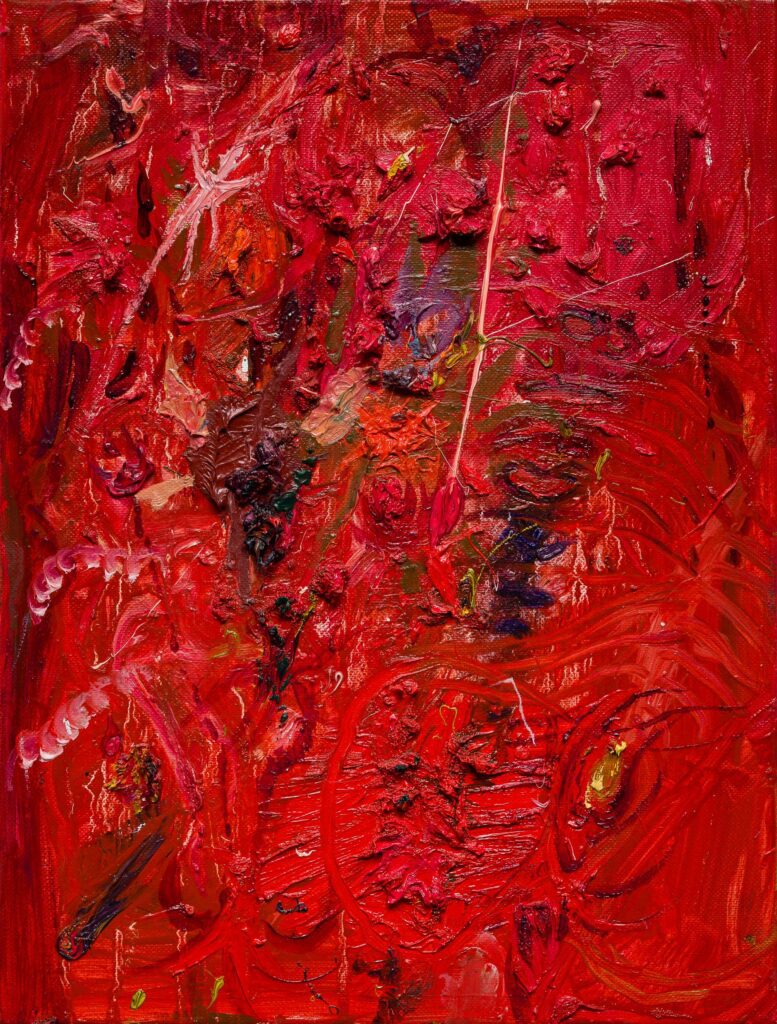
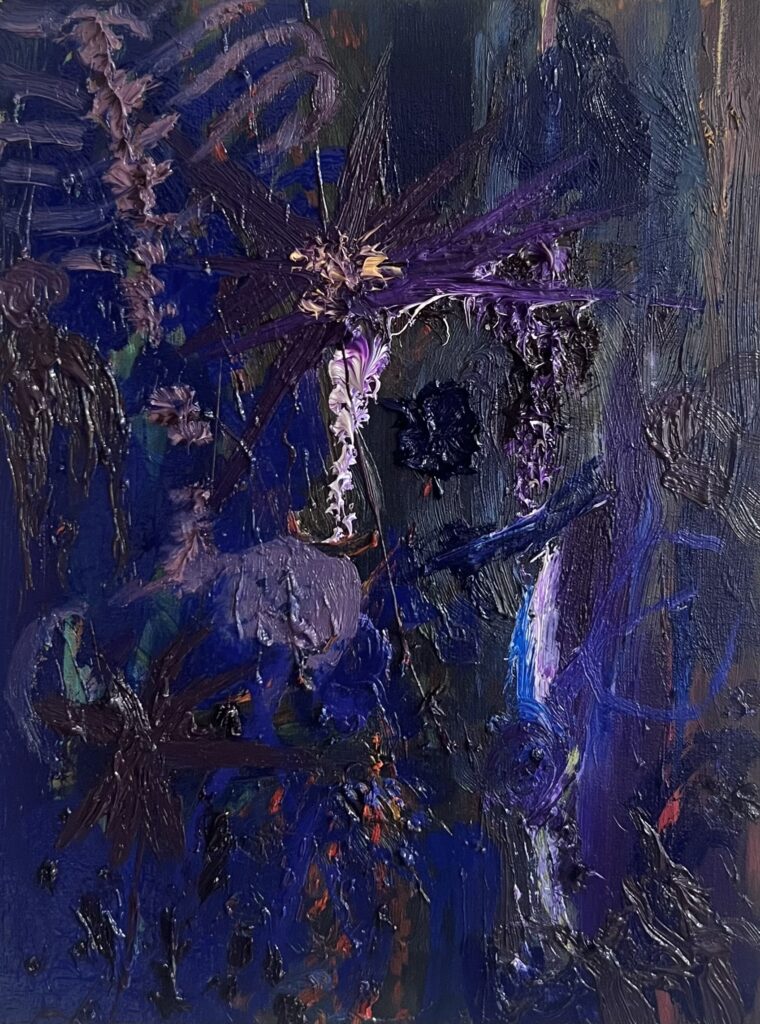
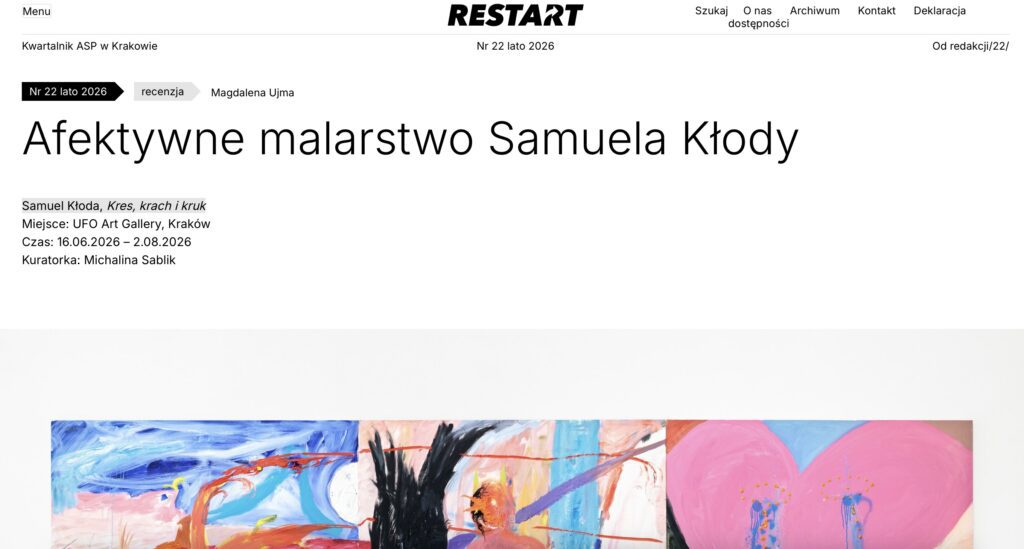
Samuel Kłoda works precisely with this feeling of trembling unease. In his expressive compositions — dense with colour and thick with texture — he attempts to render the palpable, airborne atmosphere of political and social anxiety and the destabilisation of order. He filters it, however, through his own sensibility and personal histories. From the very beginning of his practice, he has taken up grand painterly traditions and forceful cultural codes — Surrealism and Colourism among them — while also embracing references to contemporary icons of Neo-Expressionism. He draws freely on motifs from Romantic and Gothic literature, ground down by visual culture and school curricula alike, and further digested by Decadent and Modernist writers. Yet this is neither a purely camp play of conventions nor a postmodernist game with quotation. His stance is defined by post-irony: a simultaneous jest and earnestness toward the subjects at hand. The artist plays at the end of the world and mutters: creak, crash and crow.
Michalina Sablik
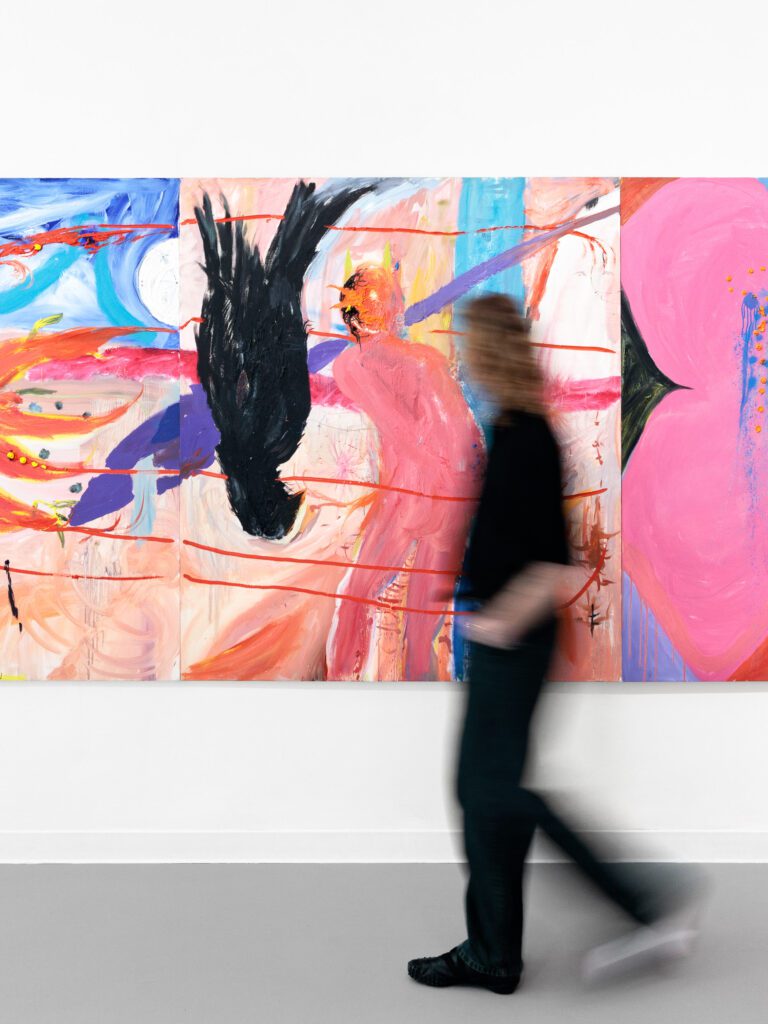
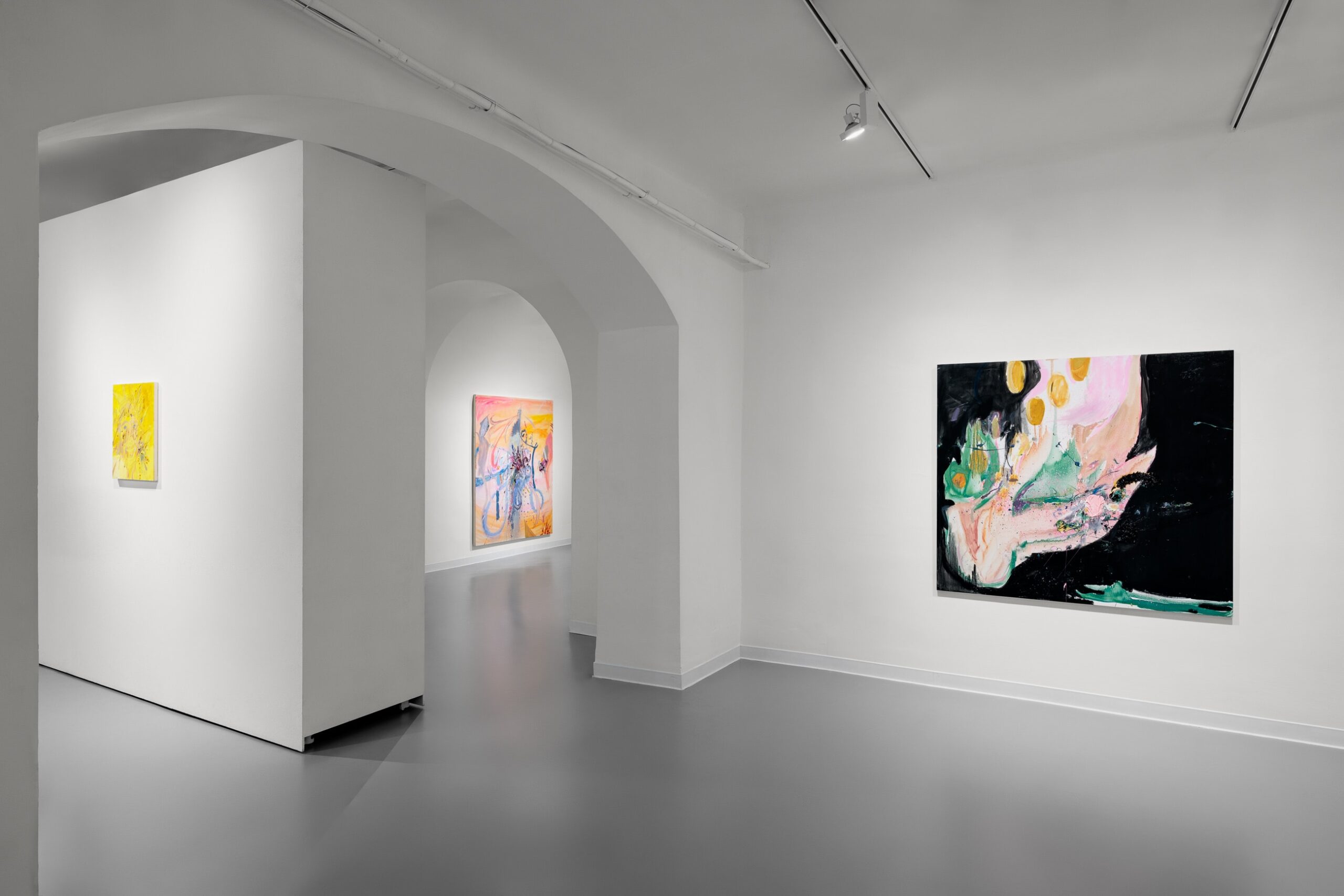
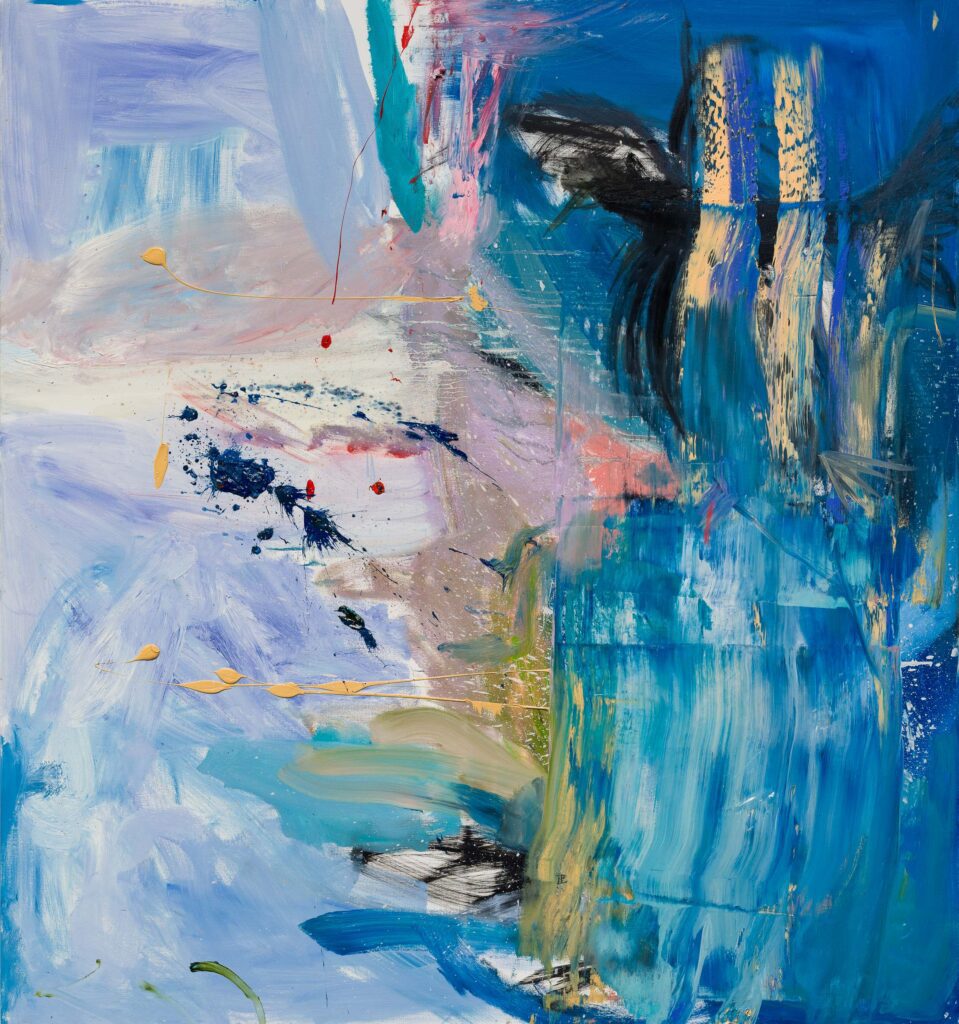
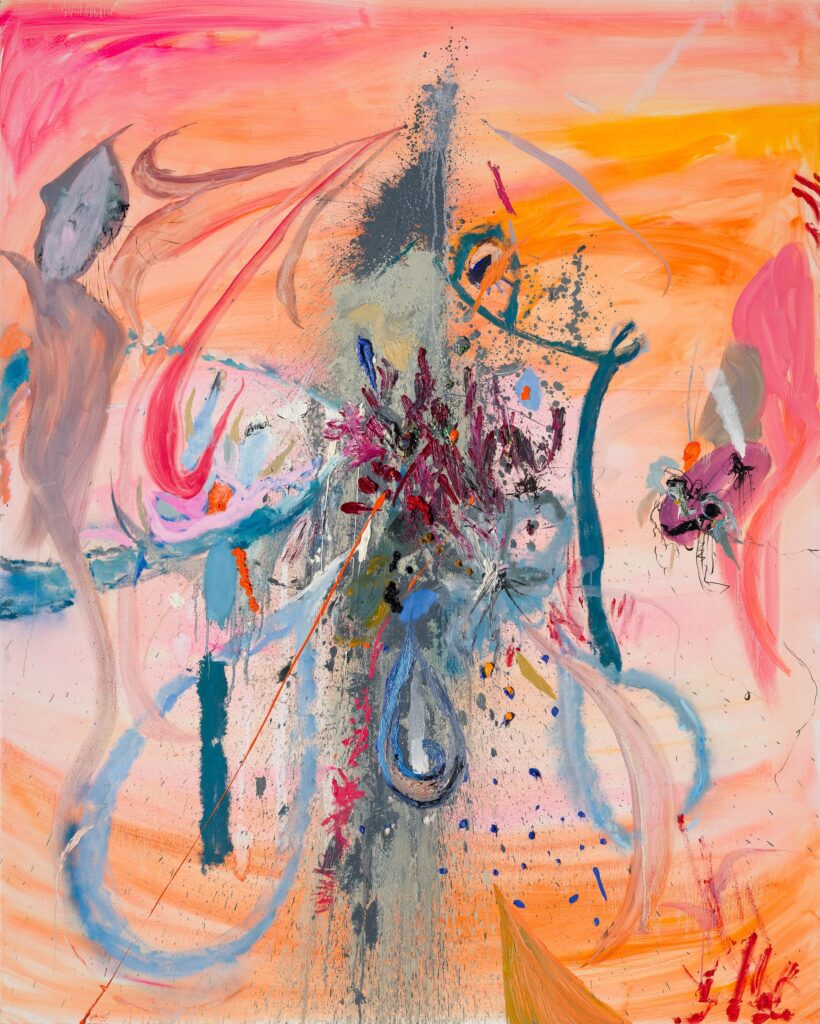
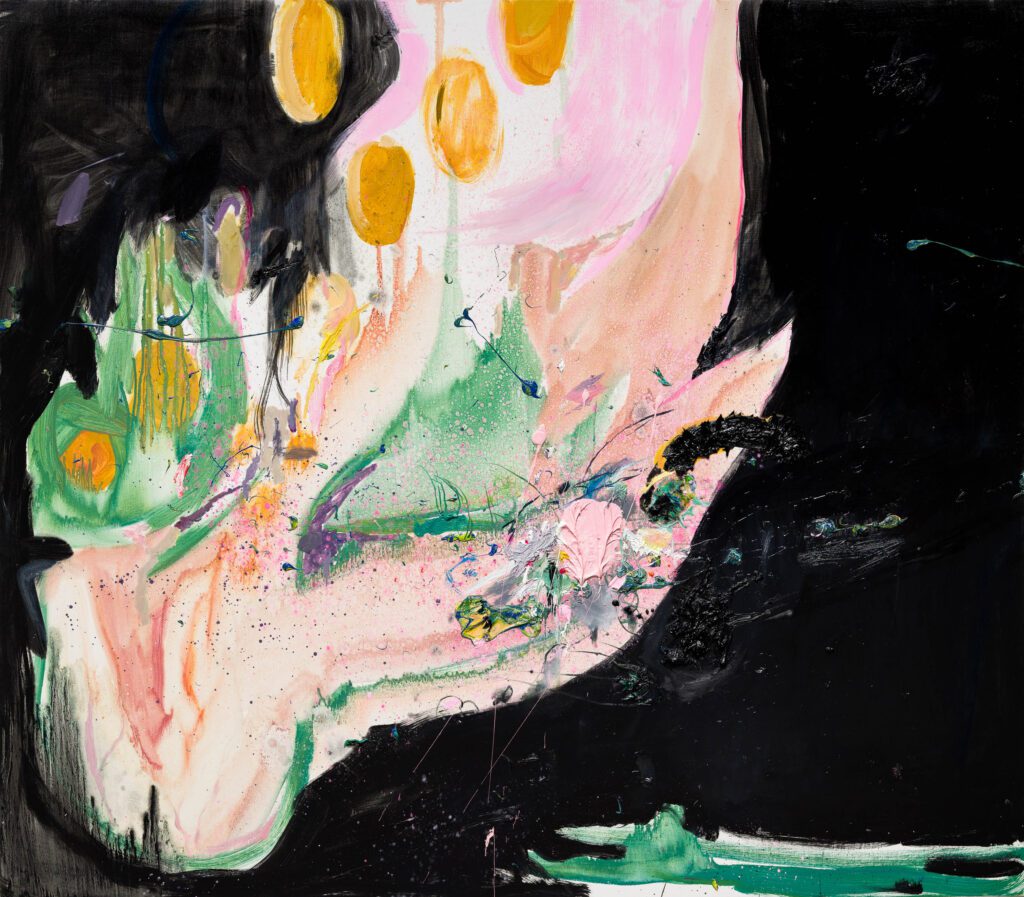
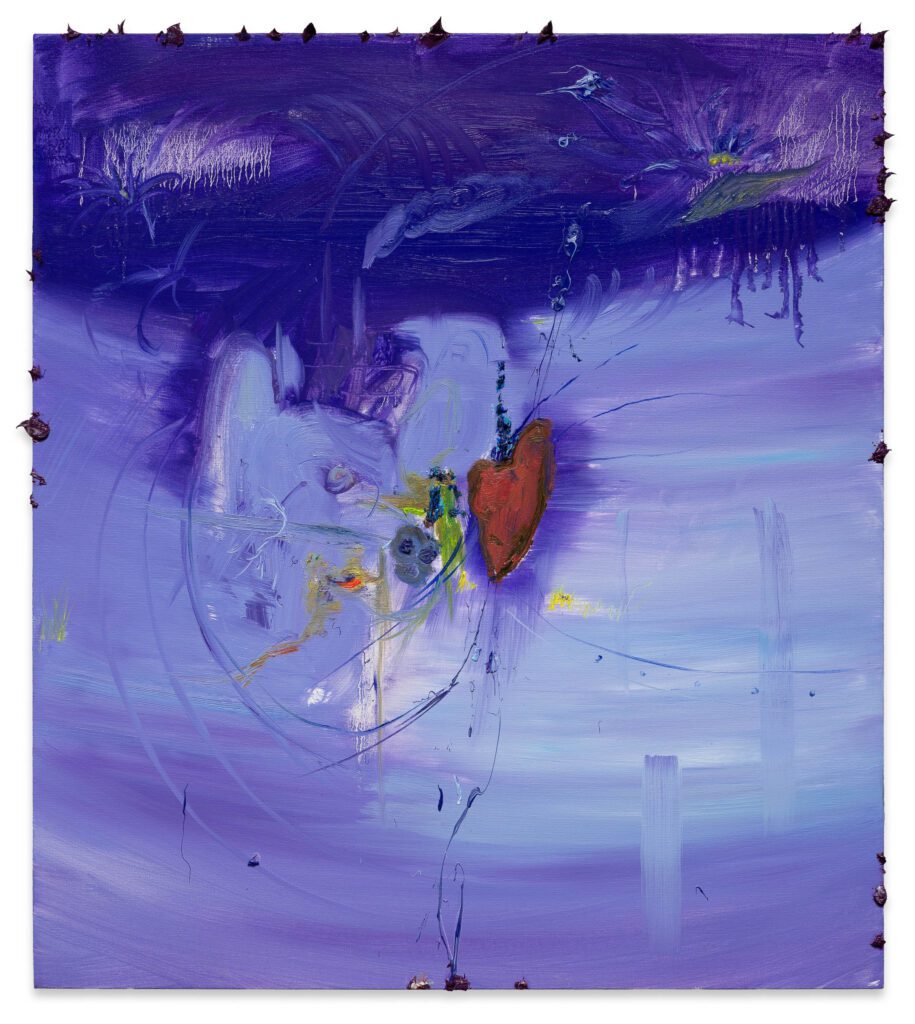
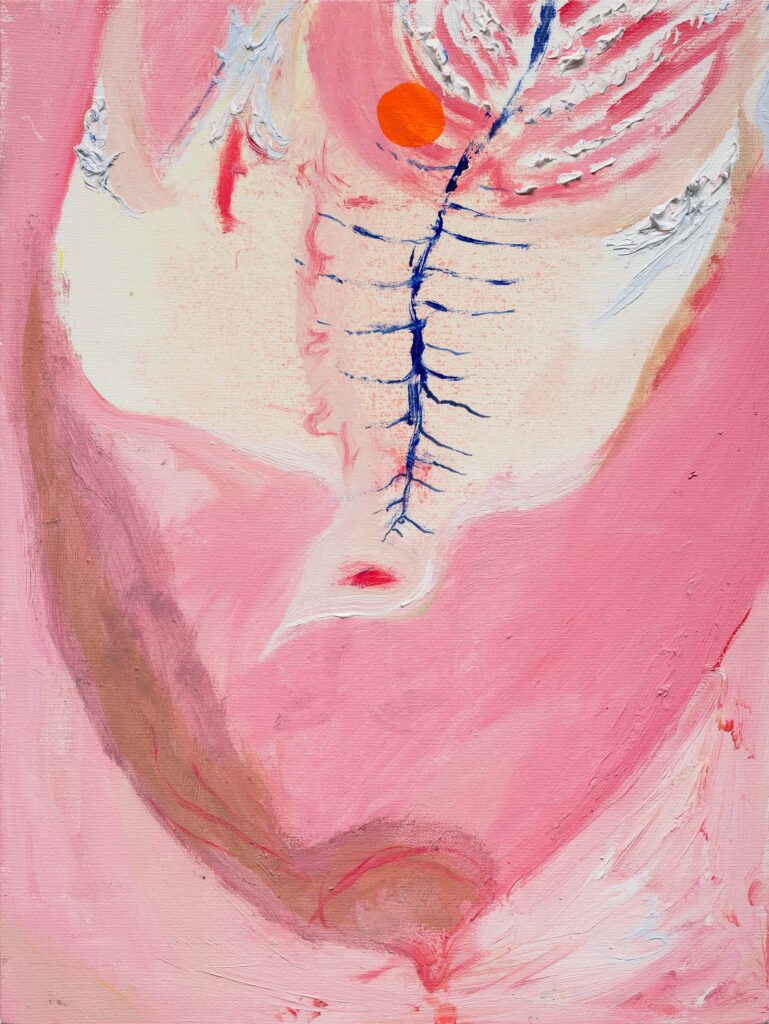
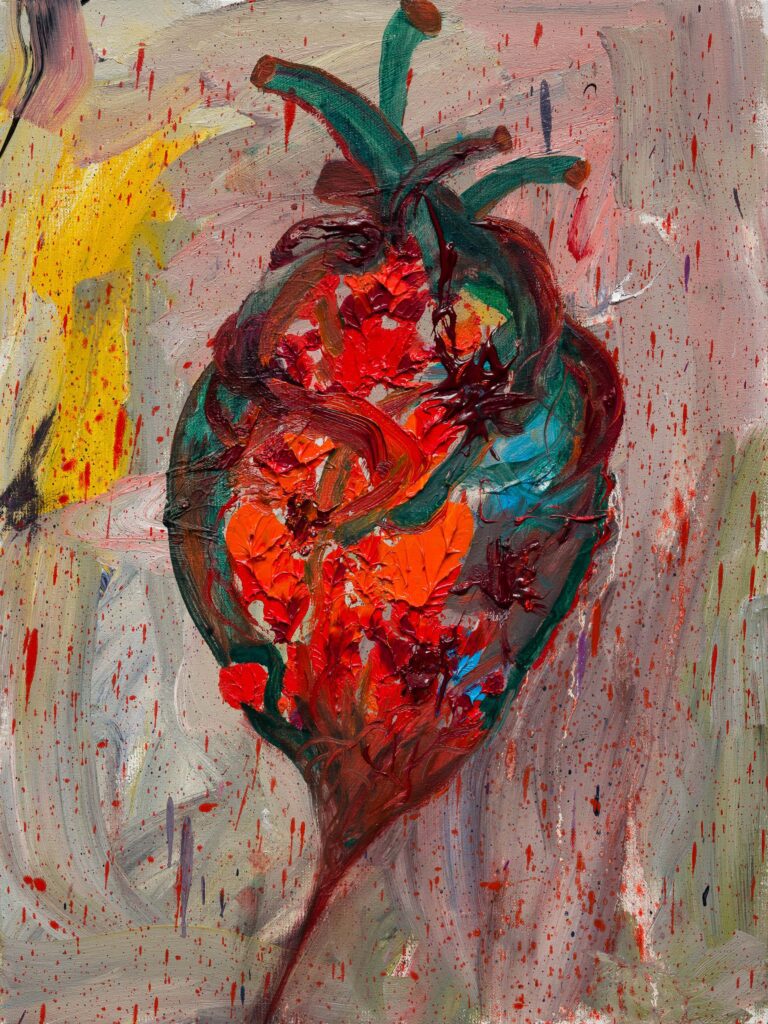
From the very outset of his practice, Kłoda has engaged with distinct painterly traditions and deeply rooted cultural codes — ranging from Surrealism, academicism and Colourism to the aesthetics of Neo-Expressionism. Yet he treats none of these as a dead repertoire of citations, nor merely as a postmodernist play of conventions. The post-irony characteristic of his work dismantles any straightforward division between the earnest and the absurd. The artist toys with iconography well-chewed by art history and visual culture, while simultaneously restoring its emotional intensity. In his earlier works he intensively explored Surrealism and the legacy of the Kraków Colourists — with their fondness for bouquets and still lifes — before gradually and ever more decisively turning towards abstraction and affective painting.
Kłoda’s style may be described as intuitive expressionism. His paintings emerge rapidly, from gesture, in a state of emotional tension. The artist juxtaposes grating, clashing colours, constructing compositions built on excess, dissonance and intensity. The canvases operate not only through colour, but also through the relief-like texture of thickly applied paint and through contrasts of scale and format. The painterly matter thickens and almost pushes beyond the picture plane, triggering a physical response in the viewer. Kłoda is drawn to painting understood as a carrier of affect — capable of provoking tension, unease and revulsion, but also a strange form of melancholic tenderness.


 Polish
  English