
“It is clear that the world is purely parodic, in other words, that each thing seen is the parody of another, or the same thing in a deceptive form”
— Georges Bataille, The Solar Anus
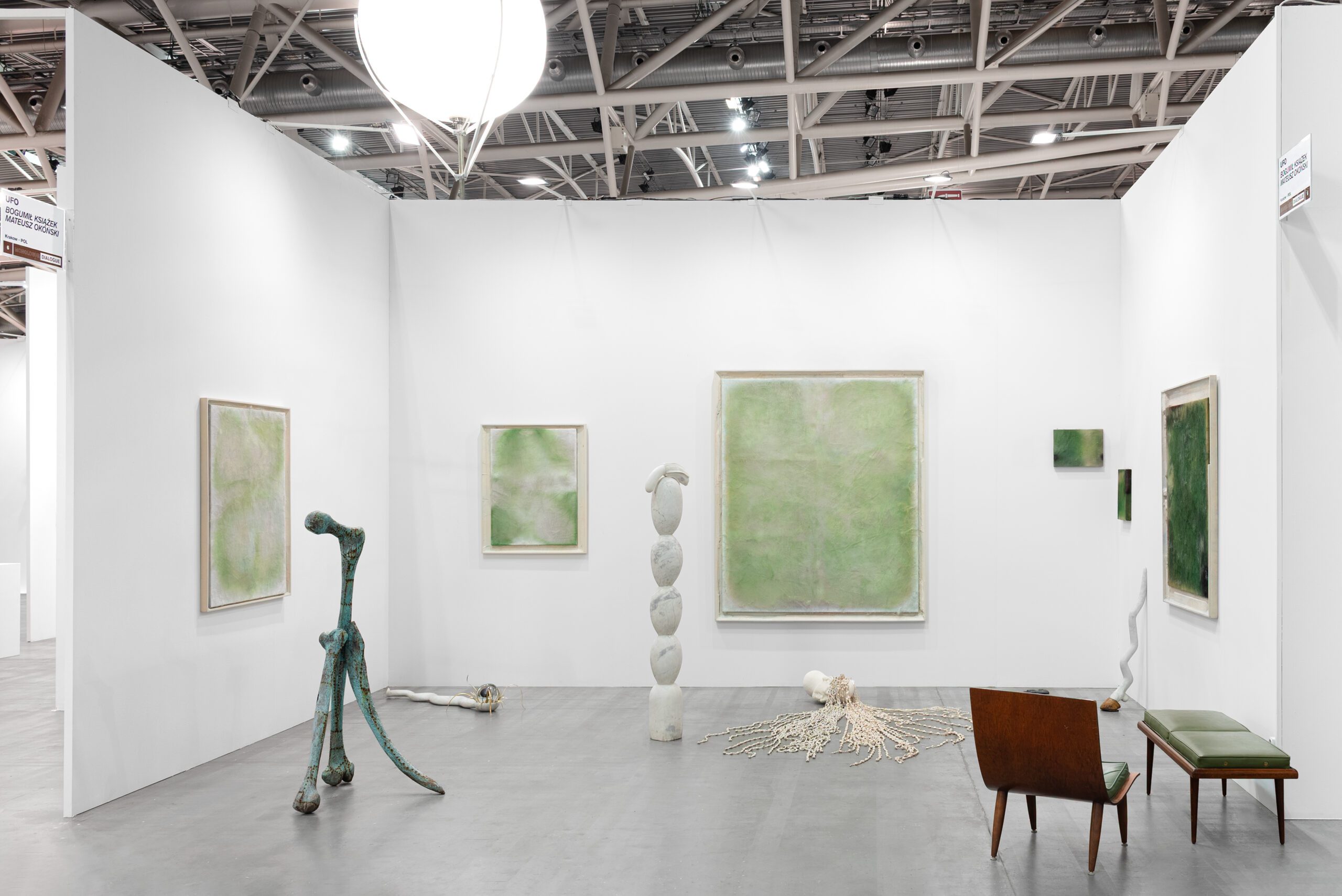
For the 2026 edition of Artissima, drafted around the theme of Fancy: A Flexible, Acrobatic Body, UFO Gallery, Krakow is delighted to introduce a dialogue — or rather a confluence — of two diverse, yet uncannily synchronous and complementary artistic positions, represented by Krakow-based artists Bogumił Książek (b. 1974) and Mateusz Okoński (b. 1985).
For Książek, painting is a phantom phenomenon, while for Okoński, sculpture is an almost alchemical practice. The palimpsest serves as a platform where both artists diverge and negotiate the gravity of their artistic stances, informed by a profound interest in anthroposophy, archaeology, and esoteric science. Książek and Okoński consider the body, both human and non-human, as a transversal universe, a habitat for phantasms and fetishes, where sensations collide in a state of heightened alert within an abject dimension. Here, the body’s flexibility lies in its viscosity, its surface tensions, and its ability to confront the authority of the body-mind divide.
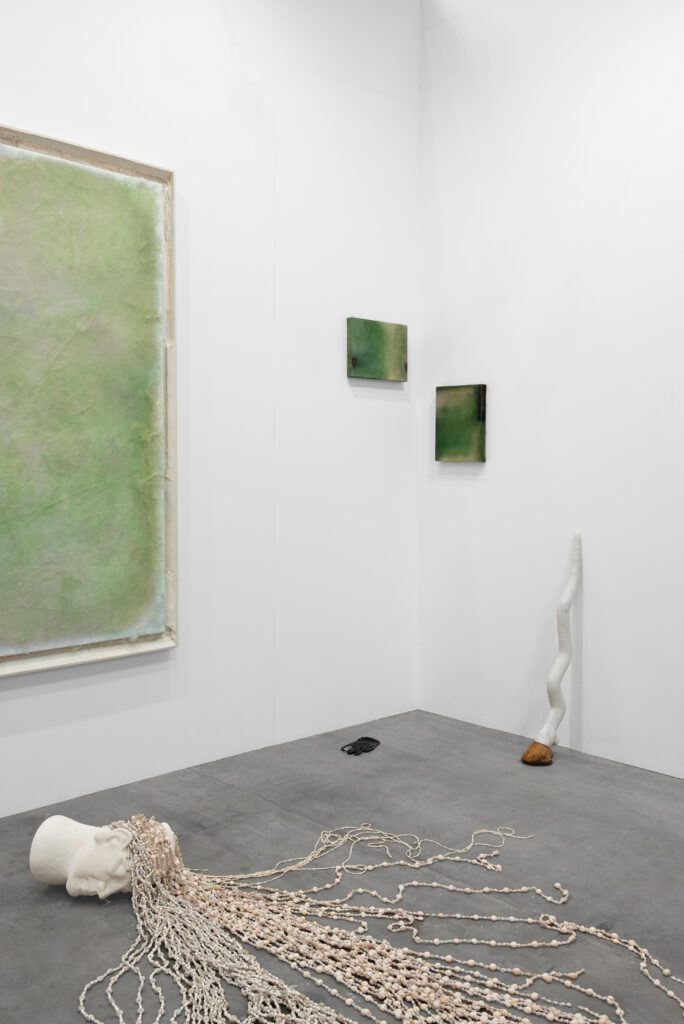
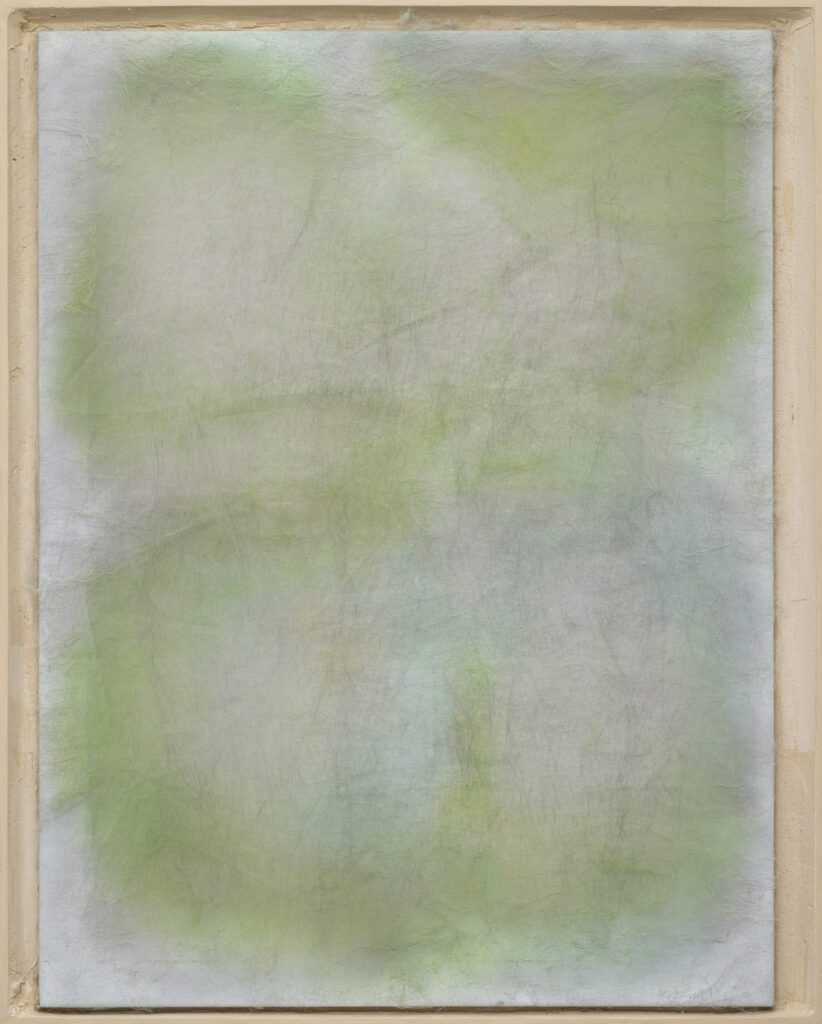
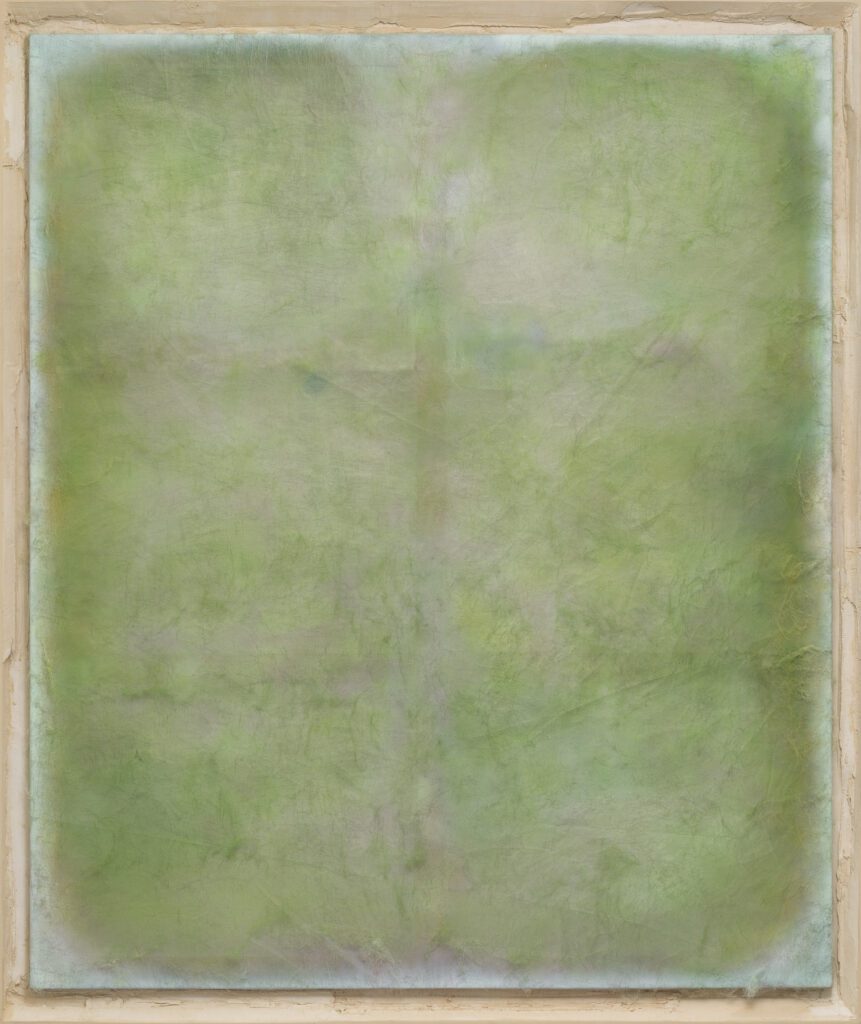
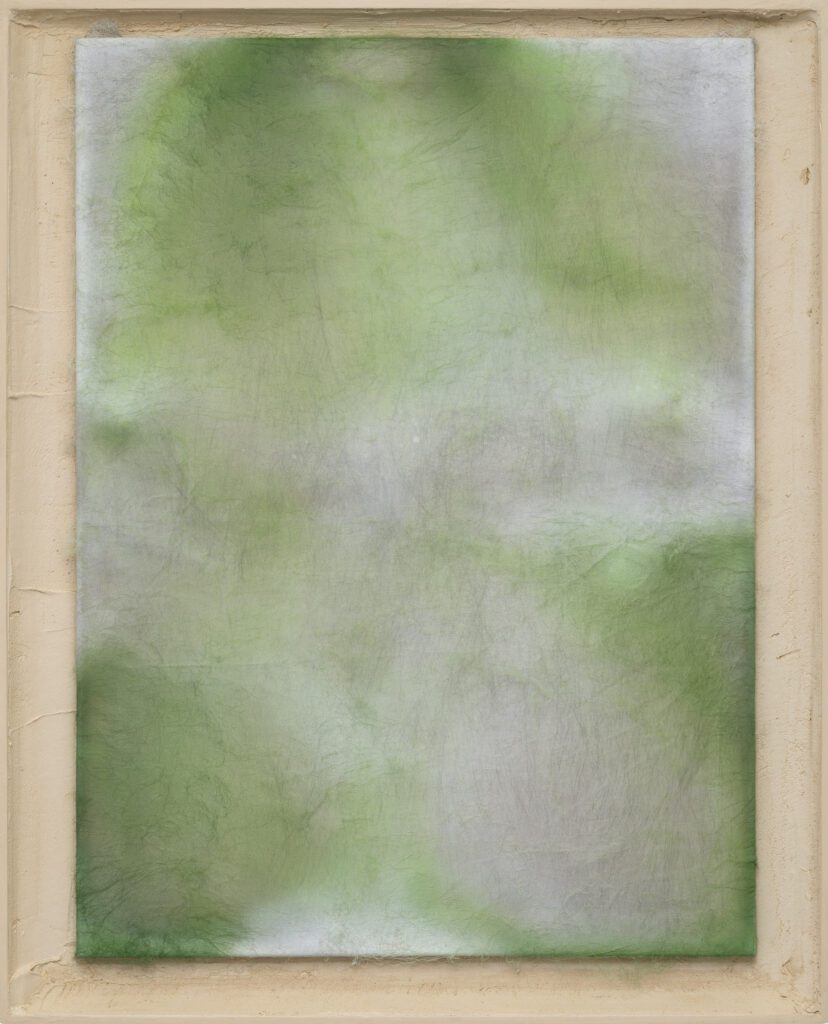
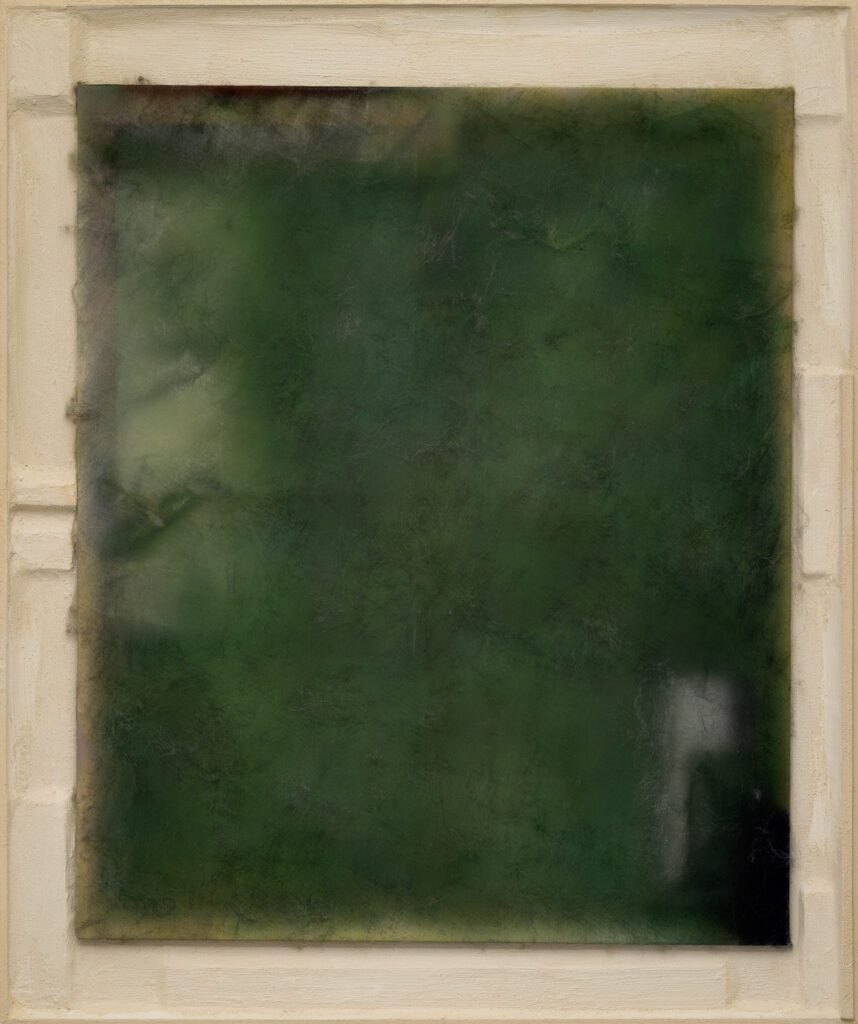
Książek’s paintings (seemingly) depict mystic landscapes on foggy days, epiphanean moments of a life newly born. This is a (painterly) phantasmagoria in a quasi-nostalgic search for a grand récit of post-human times: a process of defacement and erasure at work, a deepening of the pictorial field, a “tearing of the surface” toward “re-enchantment.” Painting here becomes a (ritualistic) performance of unmasking that reveals societal norms and structures, acknowledging the mysterious nature of the secret itself. Okoński’s work is a vivisection of a (sculptural) hysteria, caught in a struggle between surface tension and the intricacies of depth — unknown yet thoroughly explored through research and intuition, the inborn qualities of a mind lost in a delusional moment of alleged progress. Sculpture becomes a nocturnal examination of the profane, a beyond-seductive interplay of the pagan and the sacred, a permission to sin.
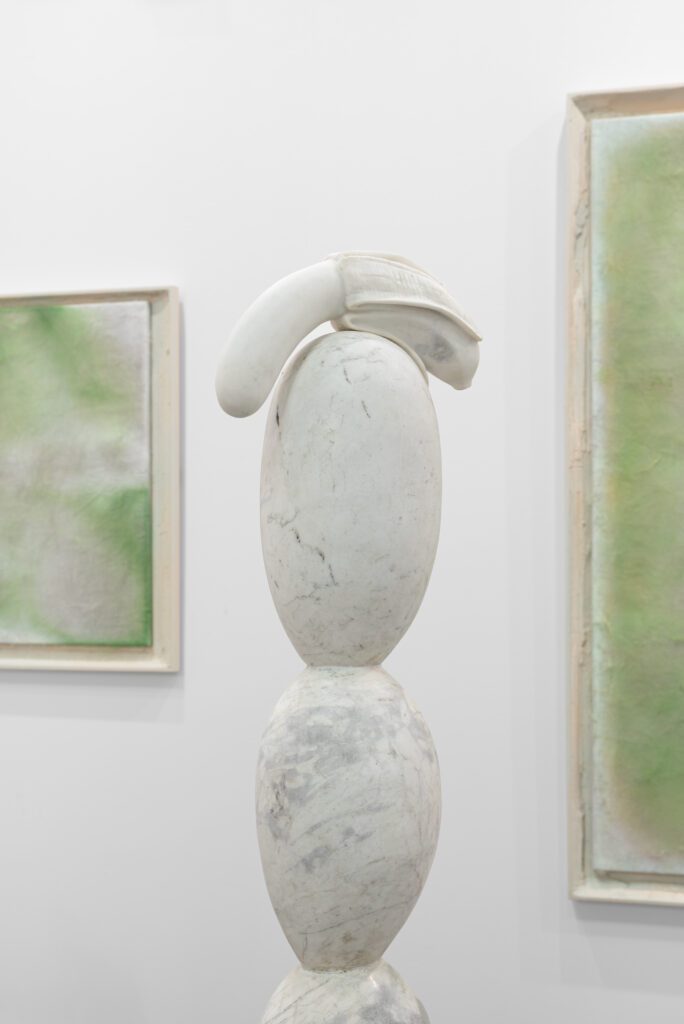
In the heterologies of melancholia — the melancholia of the post-Anthropocene — the afterlife of painting conjures with the formlessness of a sculptural gesture. Statues are ruins in reverse; paintings are explorations of transience. Both investigate the ecologies of the visible, performing a certain glitch of a tormented body in a spatial and temporal demise: a body in excess.
These are (larger-than-life) narratives of transformation — horror-like liminal stories and haunted architectures balancing conscious and subconscious imagery. Książek and Okoński conceive dystopian worlds and half-awake realities, conveying both the pathos and the humility of dawning. The artists oscillate between the animate and the inanimate, inhabiting the territories of the hybrid and polluted alongside the innocent and holy, following Marx’s prophetic prediction: in history as in nature, decay is the laboratory of life. Going beyond a legendary psychasthenia and its associated mimicry and spatial dispossession, the artists move toward an excess of visceral sensation. They explore the archaeologies of melancholia, its self-ironic spice, and the sarcasm of its camp-like reputation.
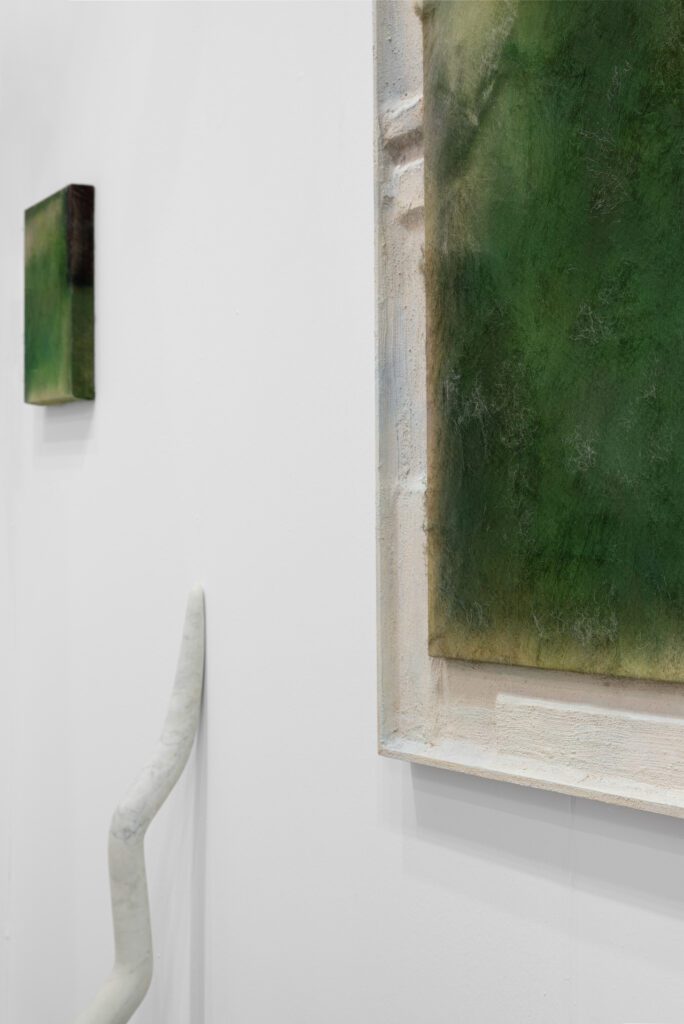
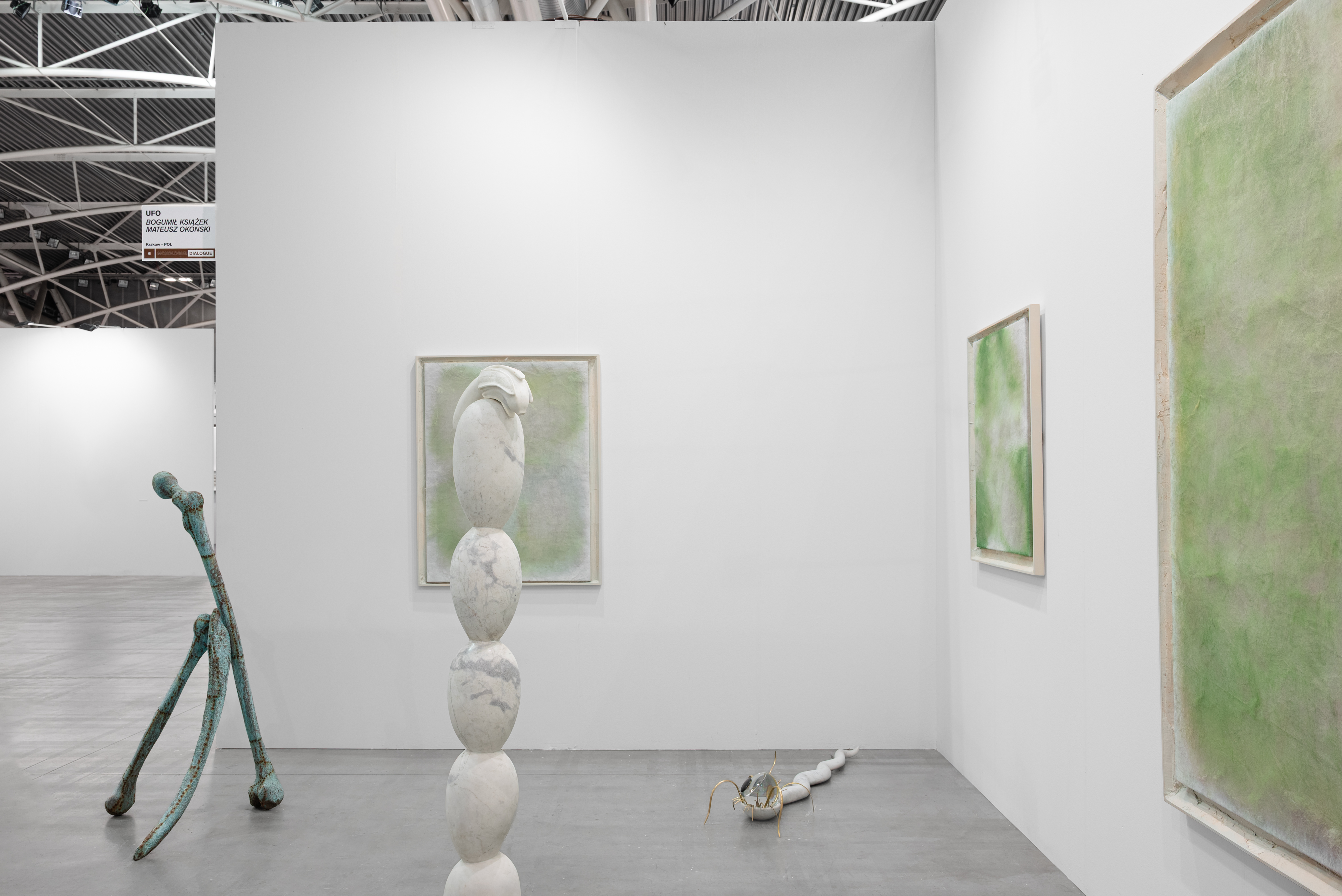
Bogumił Książek’s new painting series Fur and Moss (2026) carries an autobiographical tone rooted in the sacred groves, medieval church, cemetery, and overgrown archaeological sites of his childhood surroundings in Krakow. Returning to this site, the artist considers the physical acrobatics of nature — how moss bends around surfaces, surviving extreme cold and environmental collapse to coat every surface with quiet resilience: “I grew up on a hill overgrown with a pagan sacred grove, and long before that, a prehistoric hunter hunting mammoths had taken up residence here. All that remains is a patch of greenery overgrown by the city, and on it, the Kościuszko Mound, a medieval church, a cemetery, and an overgrown archaeological site. After years away, I’ve returned to this area. I have a studio here, and as I look out the window toward the mound, I wonder what exactly connects me to this place. Are they roots, or perhaps rhizoids; or bulbs? Do I draw sustenance from this place like a tree, or do I merely cling to its shape, taking on a concealed form like moss, or am I myself dead like fur, and only what creates me is alive?” Painterly surfaces of Fur and Moss are landscapes of memory, and of the memory’s loss, the capsules of time (lost or frozen). The artist explores the contradictory nature of the moss and the fur, at the same time underling their protective qualities and resilience: “moss is older than the forest. It will survive the bitterest cold, the driest conditions, and the disappearance of the world that surrounds it (…) it coats every surface, pointing us towards eternity and oblivion” while fur “resembles moss”, it is a distant, animal counterpart to moss; covering the skin, it insulates and protects the animal from the cold and rain, but also indirectly from dehydration. “My paintings arise at the intersection of these two surfaces: the plant and the flesh, the present and the long-extinct. The remembered and the forgotten”, concludes the artist.
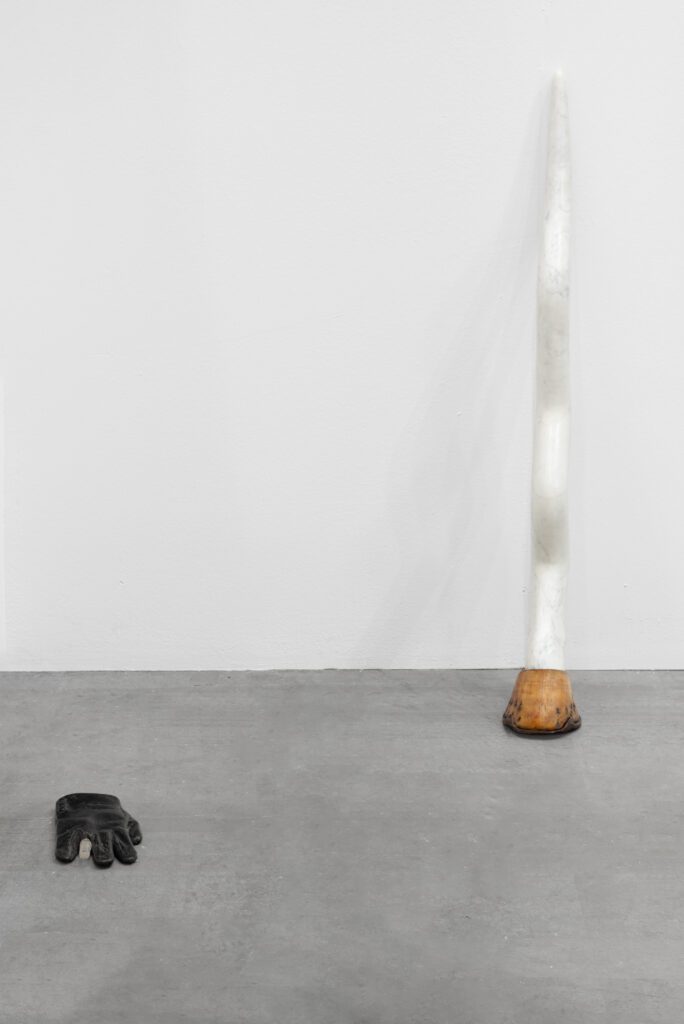
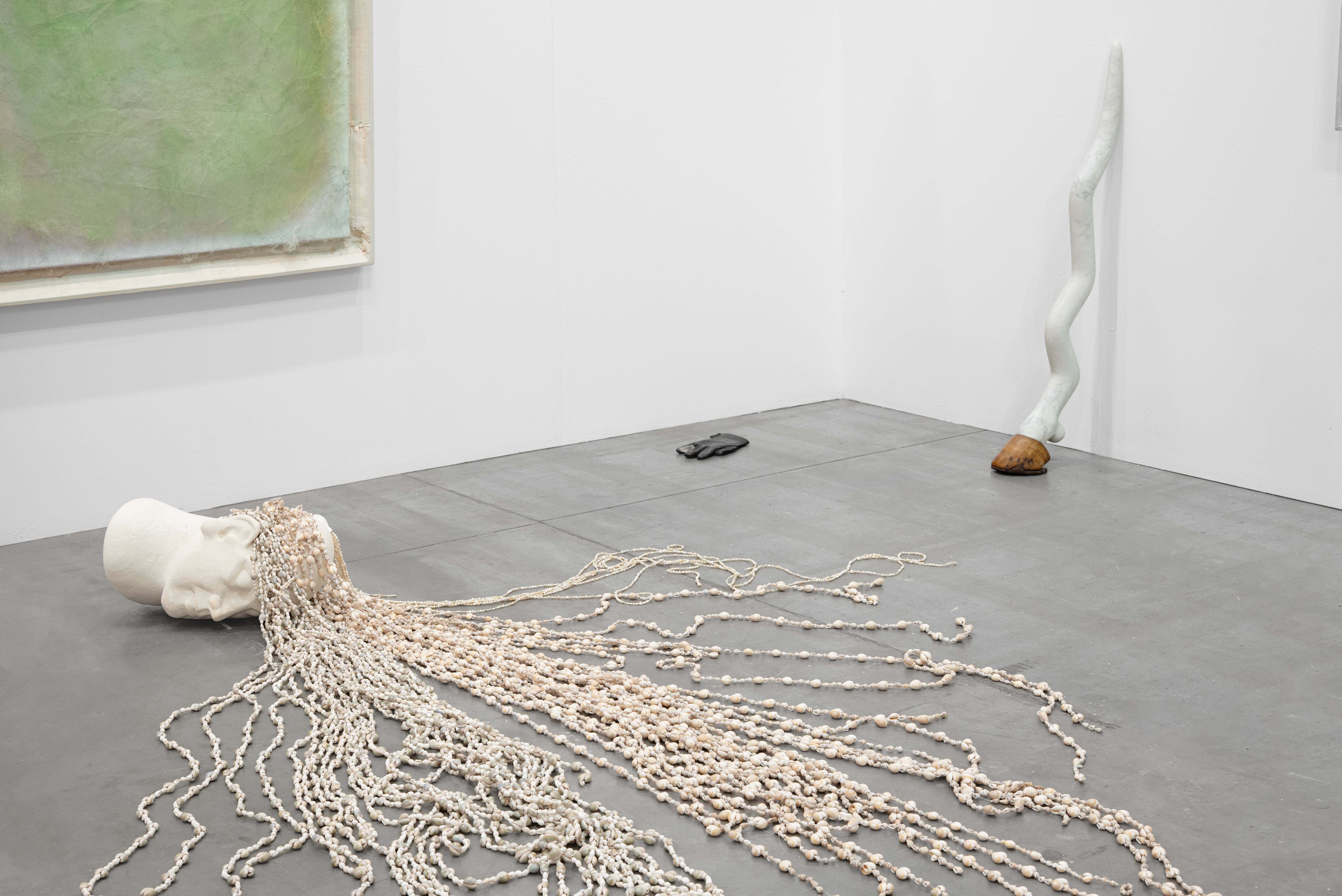
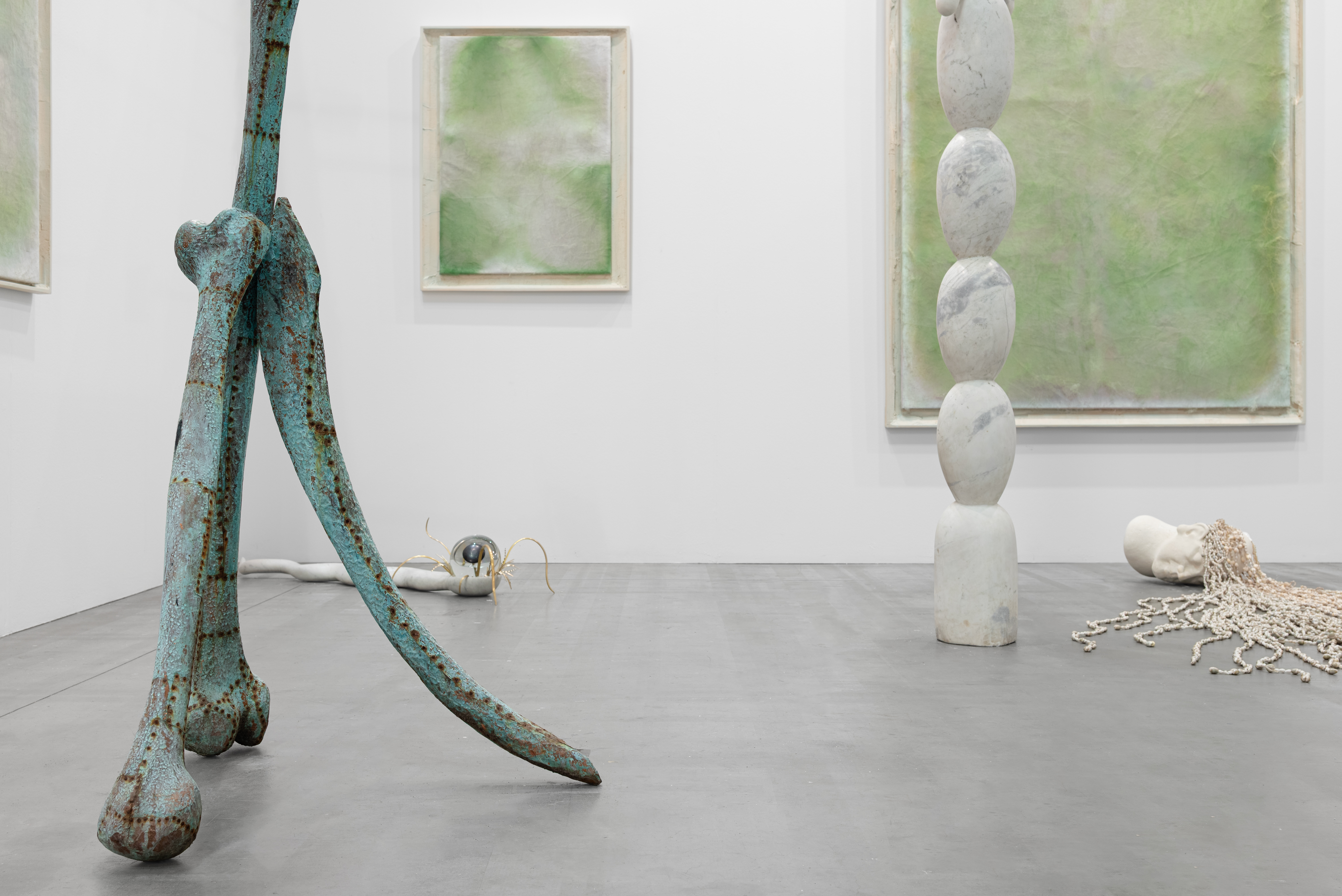
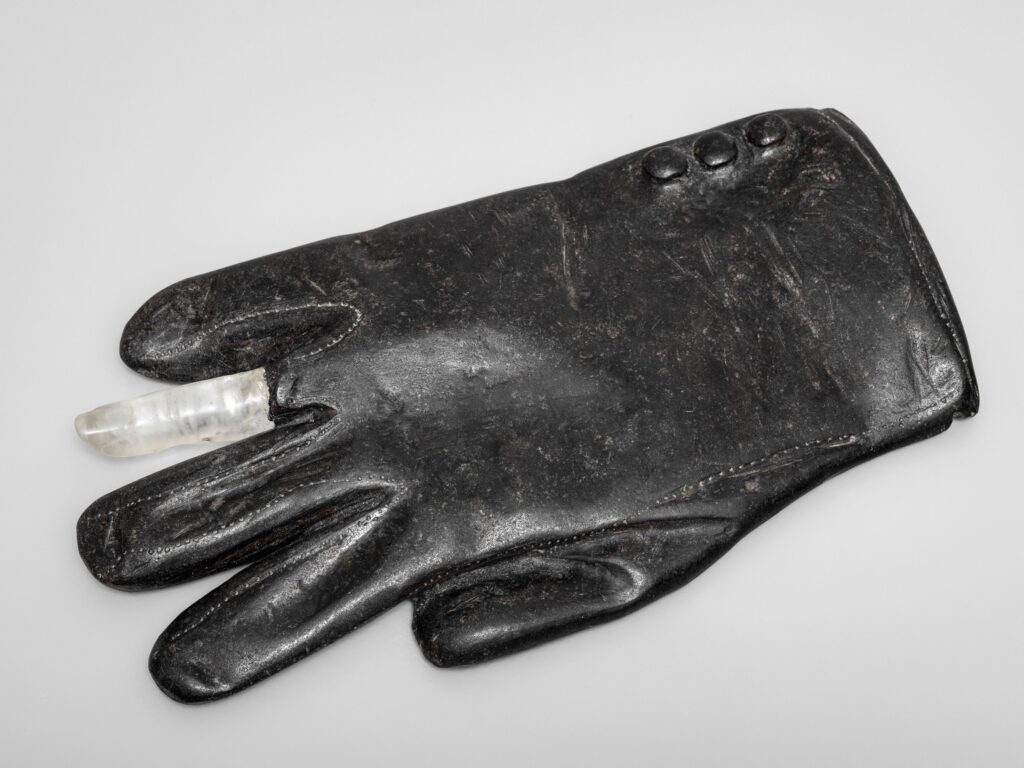
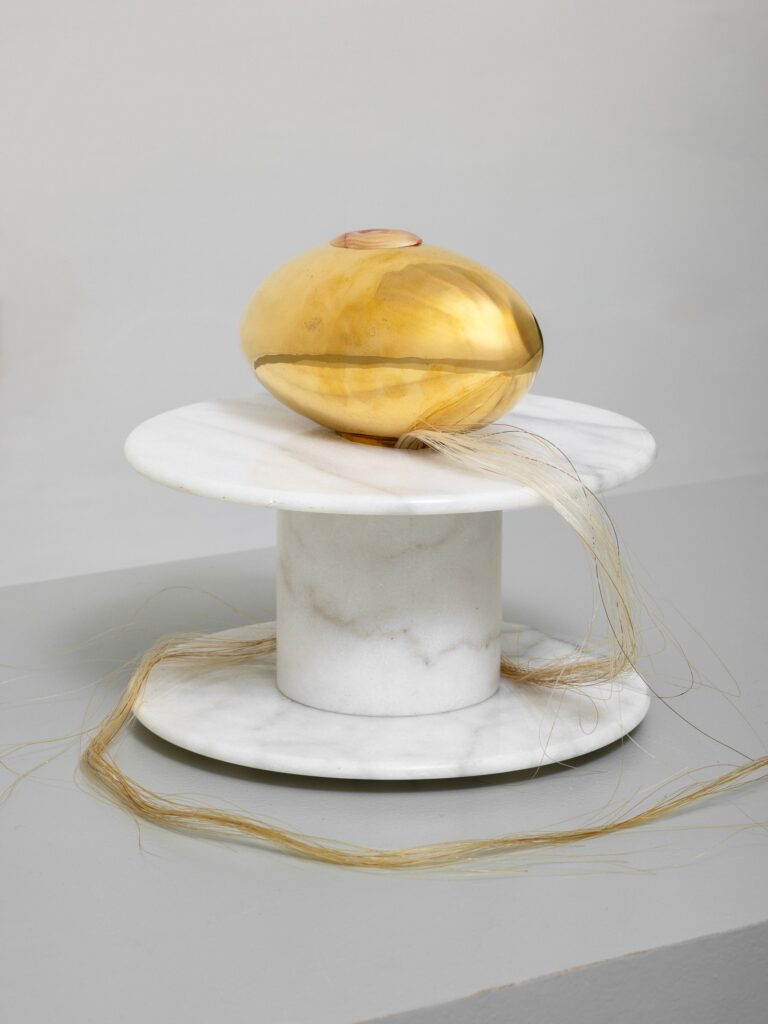
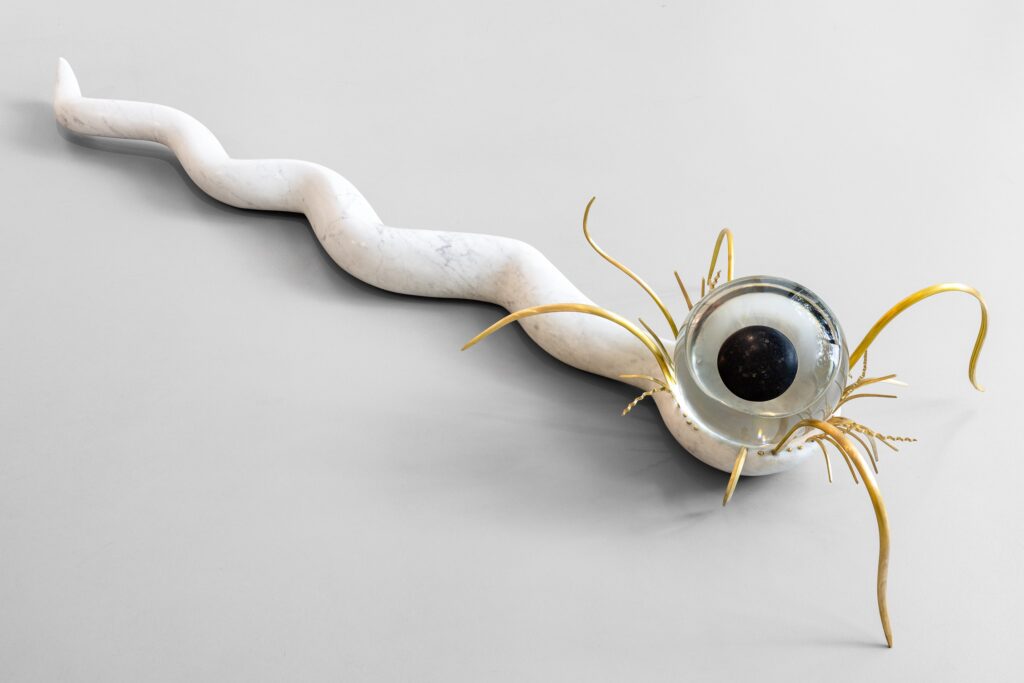
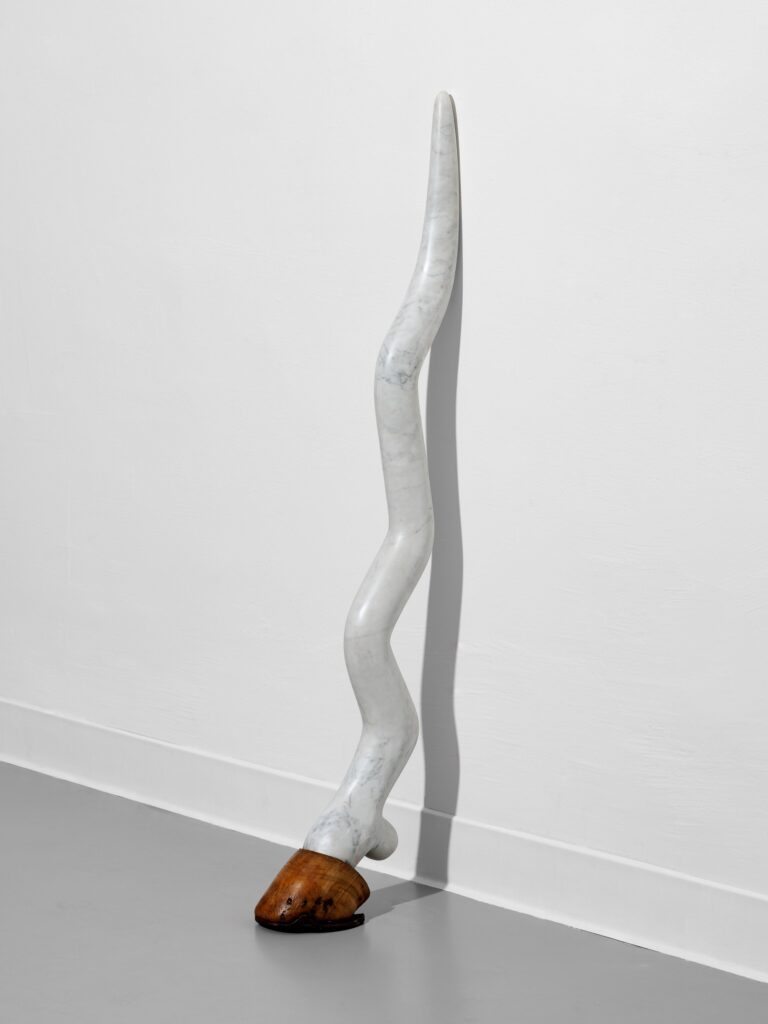
Trapped in repetitive loops of past cultural elements with a canceled future, Mateusz Okoński’s neoromantic sculptural objects are studies in hauntology; here, the heterological science of the “completely other” marries a melancholic feeling of decay and a disorder of the soul. Georges Bataille used heterology to study the taboo, excluded, and messy parts of human existence (the sacred, eroticism, violence, and objects of disgust) that cannot be integrated into rational, productive, and homogeneous societal systems. In Lars von Trier’s view, melancholia (“the black bile”) — a planetary malaise of all times, often associated with a certain sense of isolation and apocalyptic nihilism — becomes a vehicle for survival and a way of coping with catastrophe: “it will change everything,” as the film’s tagline suggests. Okoński’s sculpture Untitled (2026), a porous habitat composed of large copper bars resembling the ancient bones of an unknown species, recalls the symbolic “magic cave” of twigs from the concluding scenes of von Trier’s Melancholia, the sole refuge when existence itself breaks down. Okoński’s universe is a cabinet of curiosities, a menagerie of relics and quasi-occult objects of superpower across histories and identities, evoking a sense of longing and anticipation. His series Gloves (2026), carved from granite and mountain crystal, serve as accessories for a spiritual séance, symbolising an intimate control and authority, or a heightened sense of allure and kink. Okoński’s work applies the vocabulary of ritual: worshipping sacred and pagan deities, praising prophets, spiritual leaders, heroes, and antiheroes of culture and religion. His statues, speaking the language of both the antique and the modern, are satirical expressions of neodecadence, articulating simultaneously a contempt for the world and a love for it. Utilising eclectic materials — copper, marble, granite, horse hair, fake pearls — the artist transforms his sculptural works into a symphony of tactile experience, a breathing extension of touch that amplifies its sensual nature. Here, the “acrobatic exercise of the imagination,” to which this edition of Artissima is devoted, receives its most vibrant expression.
Adam Budak


 Polish
 English